


The format that breaks the rules of rugby betting
The first sevens tournament I bet on professionally, I lost half my stake on the first weekend. Not because the picks were wrong — the model had good closing line value across most of them — but because the variance in sevens was wider than anything I had encountered in fifteens rugby. A single yellow card in sevens can produce a swing of twenty-plus points in a fourteen-minute match. I had built a fifteens-shaped bankroll for a sevens-shaped sport, and the maths caught up with me fast.
Sevens is the same game played by different rules. Same field, same ball, same tackle laws — but seven players instead of fifteen, two halves of seven minutes instead of forty, and a structural variance profile that punishes anyone who treats it like a short version of fifteens. Roughly 5% of all global sports bettors stake on rugby, and a small fraction of that 5% pays sustained attention to sevens. That gap creates opportunity — and traps.
Sevens versus fifteens — what actually changes
Seven minutes per half compresses everything. A single try in sevens is worth a much higher share of the total available points than in fifteens. The conversion attempts must be drop-kicked, which adds a layer of execution risk that fifteens fans rarely consider. The two-minute half-time and the seven-tournament World Series structure mean players are managing fatigue across four matches in a single day, not pacing a single Test match.

What that means for bettors: every numerical relationship in fifteens rugby breaks down at the sevens scale. Home advantage is much smaller in sevens because most tournaments are played at neutral venues. Squad rotation matters more because the same twelve players cover seven matches across a weekend. Recent form means less because a side that lost in pool play on Saturday can win the cup final on Sunday — and routinely does.
The bookmaker prices sevens with awareness of all this, but the casual punter often imports fifteens intuitions wholesale. That mistake is the single most common source of recreational losses in sevens markets. Betting sevens well requires unlearning rugby instincts that work fine for the Six Nations.
Variance and what it does to your bankroll
The simplest illustration of sevens variance is the gap between cup, plate and shield outcomes in a single tournament. At any major World Series leg, the cup winner is decided across seven matches. A side can win every pool match, lose a single quarter-final to a moment of brilliance, and finish the weekend with a plate trophy instead of the cup. That single match outcome shifts the eventual finishing position by an enormous margin — and shifts the betting markets correspondingly.

For bankroll purposes, this means stake sizes in sevens have to be materially smaller than in fifteens. A 5% edge in sevens looks the same on paper as a 5% edge in fifteens, but the realised variance around that edge is roughly twice as wide. The Kelly fraction that works for Premiership outright bets will produce dramatic drawdowns if applied directly to sevens cup futures. Bettors who profit from sevens consistently use roughly half-Kelly or quarter-Kelly sizing, not because the edges are smaller, but because the variance is larger.
The other practical implication is that sevens samples need to be longer to demonstrate genuine edge. A hundred sevens bets is a much smaller statistical sample than a hundred fifteens bets, because each sevens match contains more variance per match. The bettors I know who profit from sevens treat any single season as a learning sample and judge their edge across multiple seasons rather than across single tournaments.
Integrity vulnerabilities in sevens
Sportradar monitored more than one million events across 70 sports during 2025 and flagged 1,116 suspicious matches across that universe. Sevens sits in a particular category of integrity concern within rugby — one that the Rugby Players’ Association and World Rugby have both flagged publicly. Richard Bryan of the RPA put it directly: sevens is a more at-risk environment because a single individual can have a larger impact on a single game, and the geography of the sport spreads it into markets where integrity oversight is structurally weaker than in tier-one fifteens competitions.
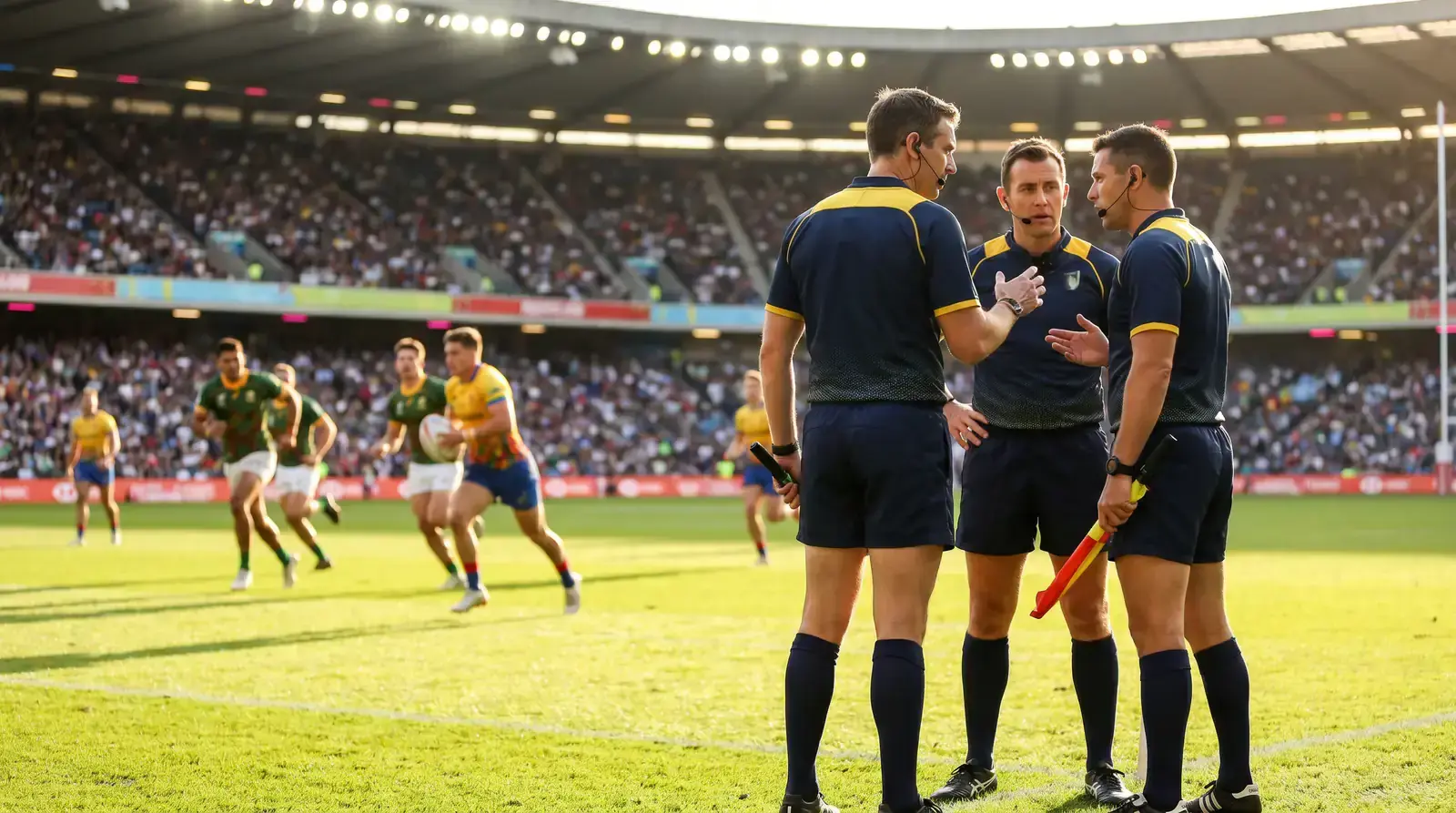
The structural risk factors compound. Sevens players earn less than tier-one fifteens internationals, which produces a financial vulnerability that match-fixing operators exploit. Tournament fields include tier-three and tier-four nations whose players are part-time and whose anti-corruption education varies wildly by jurisdiction. The compressed match length means a single deliberate yellow card or a single missed tackle can swing a match — and the betting markets — in ways that are difficult to prove as deliberate after the fact.
Sportradar and IBIA together monitor a sizeable share of global rugby betting markets, and their reporting has flagged sevens-related suspicious activity in several recent reporting cycles. The fact that the bulk of suspicious-match data does not appear publicly until well after the events does not mean the problem is absent. It means the integrity monitoring is doing what it was designed to do — catching irregularities behind the scenes before they become public scandals.
World Series betting rhythm
The World Sevens Series runs through a calendar of tournaments at different venues across the season, with cumulative points determining the overall winner. The betting markets for individual tournaments are reasonably liquid; the betting markets for overall season winners are thinner but offer interesting value windows.

The pattern across recent seasons: the eventual series winner usually wins or finals at two to three of the first four tournaments. A side that has not reached a final by the fourth tournament rarely catches up, because the points compounding effect of consistent finishes runs faster than the points available from one late-season win. That structural feature has been reflected in mid-season overall winner odds in ways the public sometimes misreads.
For tournament-by-tournament betting, the cup futures markets tend to overprice the recent winner and underprice sides with consistent semi-final appearances. The single-tournament market knowledge premium goes to whoever watches the pool stage carefully on Saturday morning — by Sunday morning, the lines for cup quarter-finals have absorbed Saturday’s performances and most of the easy retail edge has evaporated.
The Olympic tournament and its strange pricing
Olympic sevens carries different betting dynamics from World Series sevens. The fields are different — Olympic qualification produces a different mix of nations than the regular series circuit. The pressure is different — players treat Olympic medals as career-defining in a way World Series stops are not. And the markets are different — Olympic sevens attracts casual betting volume that the World Series rarely sees, which means the prices are simultaneously deeper and softer.

The historical pattern: Olympic sevens favourites are usually priced too short pre-tournament, because the public floods in on whoever the headline storyline favours. Once tournament play begins, the prices sharpen quickly, but the pre-tournament window has consistently offered value on second and third favourites at slightly inflated prices. The next Olympic cycle will follow the same template if the past two are any guide.
For broader coverage of the integrity infrastructure that protects rugby betting markets, see my full analysis of rugby betting integrity.
How to actually bet sevens without losing your shirt
Sevens is the rugby competition I most consistently recommend that newcomers avoid until they have established themselves in fifteens markets first. The variance is wider, the integrity risk is higher, the data is thinner, and the structural intuitions that work for Test rugby actively mislead in sevens. Once a bettor has a reliable fifteens process, sevens becomes a useful add-on — but only with sharply reduced stakes and a clear understanding that the realised swing of any single tournament could undo a month of fifteens profits.
The bettors who succeed in sevens treat it as a specialist niche, not a casual add-on. They watch the pool stages live. They follow tier-three player movements that determine squad availability. They size positions assuming the variance will punish them more than the fifteens version of the same edge would. That discipline turns sevens from a bankroll hazard into a genuine source of supplementary value.
