
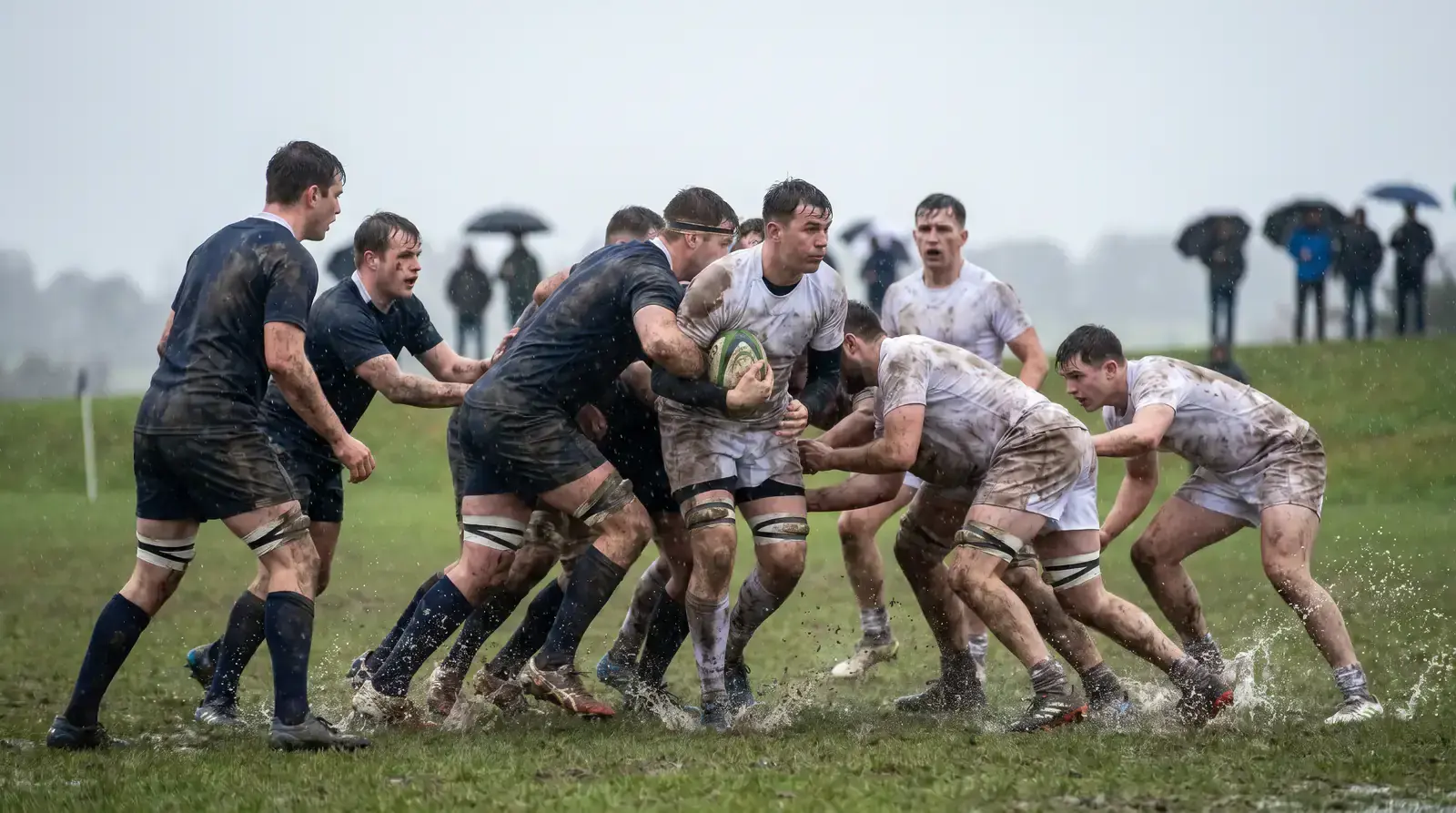

The afternoon a forecast cost me a confident position
A Saturday a couple of years back, I had locked in a Premiership totals over by Thursday lunchtime at 49.5. The match featured two attacking sides at a southern ground with a forecast for dry conditions. By Saturday morning, the forecast had flipped to heavy showers from kick-off, and the totals line had collapsed to 41.5. My position was already a loser before the first whistle. The bet was eventually settled under at 32 points. The lesson was not about the rain itself — it was about how quickly the market reads forecast changes once they firm, and how completely the value of a totals position can evaporate between Thursday and Saturday.
Weather is the single most consistent factor in rugby totals betting and the most consistently underestimated factor in casual betting. Wind affects kicking accuracy. Rain affects handling. Cold affects set-piece dynamics. Each of these effects has been measured across thousands of matches, and the magnitude is large enough to materially shift fair pricing on the totals market.
Wind and the kicking game
Wind is the most damaging weather condition for accurate kicking and the most disruptive for territory-based rugby strategies. A swirling wind at Twickenham, the Aviva Stadium or Stade Ernest-Wallon in Toulouse routinely reduces kicker accuracy by 15-25%, which translates directly into points left on the field. Penalty kicks that would normally clear the posts from 45 metres go astray. Conversions from wide positions miss. Drop-goal attempts become last-resort decisions rather than tactical weapons.

The structural impact on totals is significant. A match with two reliable kickers in calm conditions averages around 5-6 successful penalty kicks plus 4-5 conversions across both sides. The same match in a strong crosswind might produce 3-4 successful penalties and 2-3 conversions. That difference compounds to 10-15 points off the typical total — well outside the bookmaker’s pre-wind totals margin.
The market does adjust to wind, but in pulses. The forecast typically firms 36-48 hours before kick-off, and the totals line tends to move once on Thursday evening and again on Friday morning. By Saturday morning, the line has absorbed the forecast. The window for the patient bettor sits in that early forecast period — taking the under before the line moves, or accepting that the over is no longer the value it appeared to be in the original Thursday pricing.
Rain and ball handling
Wet weather impacts rugby differently from wind because the disruption is to handling rather than kicking. Drop-passes increase, knock-ons multiply, scrums become more frequent because of the additional resets, and the overall match tempo slows. Tries become harder to score because the ball is harder to move, but penalty counts often rise because the breakdown becomes messier.

The net effect on totals is usually downward, but the magnitude depends heavily on which side is more affected by handling problems. A heavy-forward side like Saracens or Toulouse Métropole at home in wet conditions can dominate territory through the set piece and accumulate kickable penalties, which sustains the score even as tries dry up. An attacking-shape side like Bordeaux or the Crusaders in the same conditions loses its primary scoring threat and the total collapses.
The interaction between wet weather and team style is where the genuine value lives in rain-affected matches. A blanket “under in the wet” position misses too many matches where the right kind of side scores anyway through penalties. The sharper read is “under against attacking sides in the wet” and “over against territorial sides in the wet”. The casual market reads only the weather, not the matchup, and the bookmaker prices both — but slowly enough that the early position holders capture the edge.
Cold and the set-piece dynamic
Cold weather affects rugby in less obvious ways than wind or rain, but the impact on totals is real and consistent. Below five degrees Celsius, scrums dominate possession periods more decisively because the heavier conditions favour the heavier forwards. Lineouts become more reliable for the throwing team because hand warmth matters less and ball release is more controlled. Backline play slows because handling cold balls reduces handling accuracy.

The compounding impact: cold weather matches produce more set-piece time, more territorial kicking, more penalty exchanges and fewer try-scoring opportunities from broken play. Totals tend to come in 4-8 points lower than fair-weather equivalents at the same venues. The pattern is sharpest in Six Nations February matches in Edinburgh and Dublin, where temperatures regularly drop below five degrees and the totals market historically underprices the cold effect.
What the casual market consistently misses about cold weather: it favours sides with dominant scrums and reliable lineouts. A side that struggles at the set piece in normal conditions struggles disastrously in cold conditions because every contested platform becomes a points opportunity for the opponent. The handicap implication is meaningful — handicap value on set-piece-dominant sides in cold matches is consistently larger than the bookmaker prices.
Forecast timing versus market reaction
The relationship between when a forecast firms and when the market reacts is the foundation of weather-based betting strategy. Modern weather forecasts become reliable 48-72 hours before an event. The betting market, meanwhile, sets initial lines five to seven days out and adjusts incrementally as new information arrives. The gap between forecast and market is widest early in the week and narrows toward kick-off.

The number of active monthly accounts at the largest UK online operators climbed to 12.7 million in Q1 2025/26, and a meaningful share of that volume now flows in the final 48 hours before major rugby fixtures. That late-window concentration of money is what closes the weather-versus-market gap on Saturday mornings. The bettor who positions on Wednesday or Thursday based on a firming forecast captures value the Saturday-morning crowd will never see.
Chad Yeomans of Betway captured the bookmaker’s perspective on these dynamics directly during Cheltenham 2025: when fancied selections fail, the books walk away comfortably. Weather-related upsets work the same way for rugby books — the casual money piles in on the totals over assuming dry conditions and good attacking rugby, and a Friday forecast change catches enough of that money on the wrong side to make the weekend profitable for the operator.
Weather patterns by competition
Each major competition has its own weather signature worth knowing. Six Nations weather is brutal — February through March across Britain, Ireland, France and Italy produces enormous regional variation, and the totals market often misreads the conditions at northern venues. Premiership weather is similarly variable from autumn through to spring, with mid-winter mud games as the most reliable totals unders.
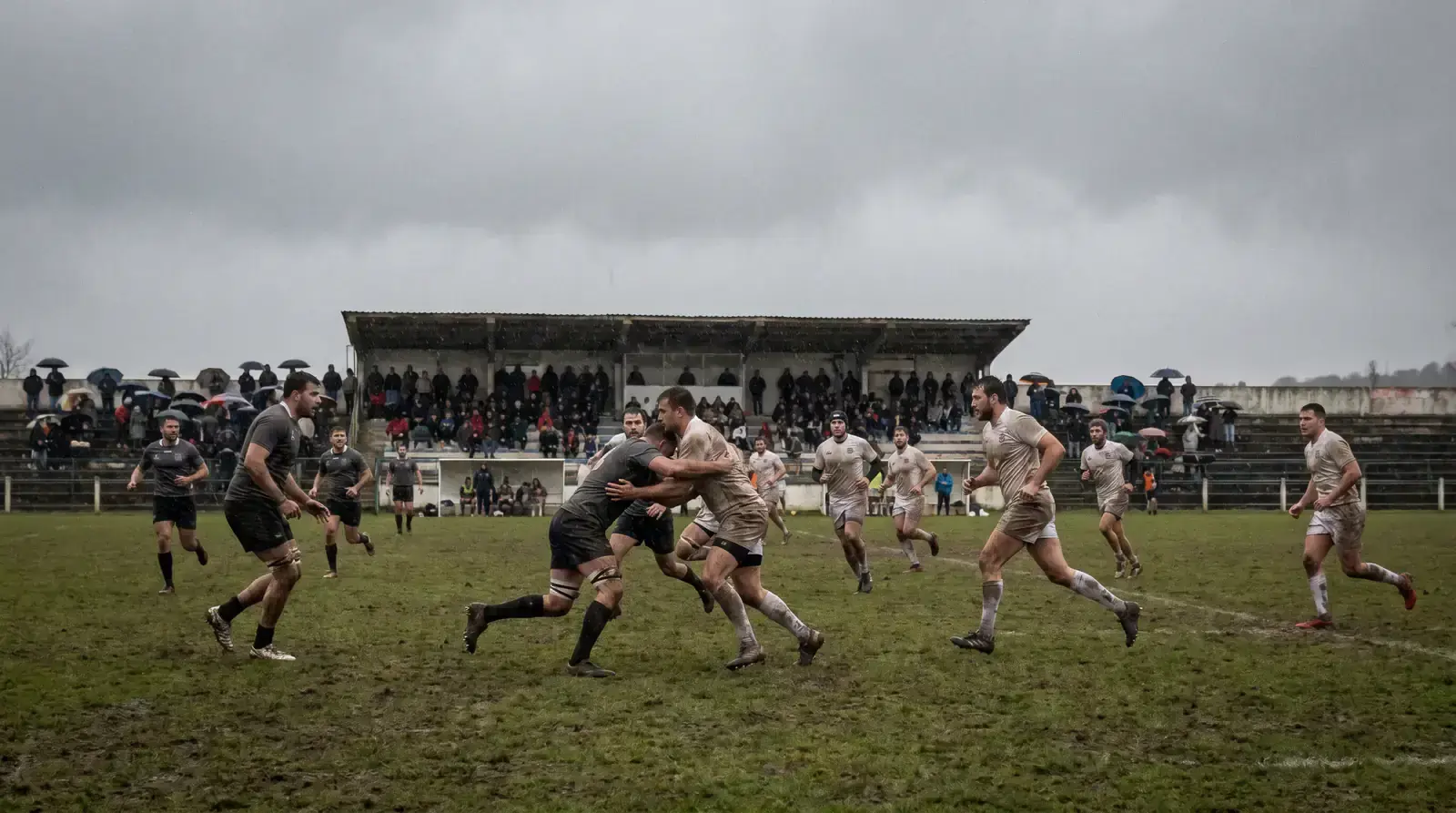
Online active accounts at UK operators climbed sharply in early 2026, and the volume now flowing through Six Nations matches has tightened pricing on weather effects materially. The edges that existed five years ago have narrowed. The pattern that remains profitable: identifying conditions at specific venues that the international books price less accurately than the local books would.
Super Rugby Pacific is largely played in fair weather conditions across the southern hemisphere autumn and winter — March through June covers the regular season, and the Pacific climate is more consistent than European equivalents. Top 14 matches in the south of France produce dry conditions; matches in Brittany and the north produce wetter conditions, and the totals market often does not properly differentiate between regional weather profiles.
If you want a related angle on how line movement around team news interacts with weather forecasts, see my piece on rugby line movement and team news.
Discipline that turns weather into a usable edge
My personal weather checklist: I track the forecast for any match I am modelling from Tuesday onward. I do not bet on Saturday-only forecasts; the line has usually adjusted by then. I look at both the major forecasting models — ECMWF and GFS — and only act when they agree. I weight the totals adjustment by the team styles involved rather than treating weather as homogeneous. And I do not chase weather-based bets in playoff matches, because the players and coaches train specifically for the conditions and adjust their game plan accordingly.

The weather edge in rugby betting is real but it is not free. It requires monitoring forecasts when other people are not paying attention, building a model that captures the matchup-weather interaction rather than treating weather as a generic factor, and accepting that the edges are smaller than they used to be. Weather is one of several factors that, combined, produce a sustainable rugby betting process. Treated as a one-shot edge, it disappoints; treated as a structural input, it pays.
