


One housekeeping note before we dig in
The first rugby bet I ever placed lost by half a point. England were giving Wales 6.5 at Twickenham, the late kick was wide, and the line settled at exactly seven. That was 2014. I have spent the twelve years since modelling rugby union and rugby league markets — mostly handicap pricing and in-play value — and that single half-point explains most of what new bettors get wrong. Rugby is not football. The scoring is lumpy, cards reshape games more than any other major team sport, and the markets are thinner than people assume.
That thinness is the opportunity. Global rugby betting is now worth roughly USD 8.26 billion, around five percent of the worldwide sports-betting market, and growing at about 8.1 percent a year. Match outcome and margin betting together account for close to 60 percent of the total wagered. Those are not enormous numbers next to football, but they are enough to keep bookmakers from sharpening every market the way they sharpen the Premier League. If you understand what rugby actually rewards — territory, set piece, ten-minute scoring bursts — you can find spots where the line is genuinely soft.
This guide walks through how odds are built, what markets to focus on, the tournament calendar that drives volume, in-play discipline, the regulation that shapes whether you can even place a bet, the integrity machinery sitting behind every market, and the bankroll habits that separate people who still bet five years from now from people who do not. I quote real data and real people throughout. I do not name a single bookmaker as good or bad — that is not what this site does.
One housekeeping note before we dig in: I write from a UK perspective, with regular sideways glances at Australia, New Zealand, South Africa and the US, because rugby is genuinely a multi-market sport and the regulatory picture is different in each.
The 90-Second Version for Busy Readers
- Rugby betting is a USD 8.26 billion global market, around 5 percent of all sports wagering, growing at roughly 8.1 percent a year.
- Match outcome and margin bets account for about 60 percent of all rugby volume. Handicap markets are where serious bettors focus.
- UK total gambling industry GGY hit a record £15.63 billion for 2023–24; Australian sports betting passed AUD 8.32 billion in 2025; BetStop self-exclusion now lists 35,671 people.
- Sportradar flagged 1,116 suspicious matches across all sports in 2025; integrity monitoring around rugby is robust and bettor-accessible via IBIA and the World Rugby Integrity Unit.
- The skill that compounds is line shopping plus flat staking at 1 to 3 percent of bankroll. Not pick quality. Stake discipline.
What Rugby Betting Actually Covers in 2026
A friend asked me last autumn whether "betting on the rugby" meant the Six Nations or the NRL Grand Final, and the honest answer is yes, both, and a dozen other things. The phrase is a wide umbrella, and it has got noticeably wider over the last three years as women's rugby markets matured and US sportsbooks started carrying Major League Rugby outright lines.
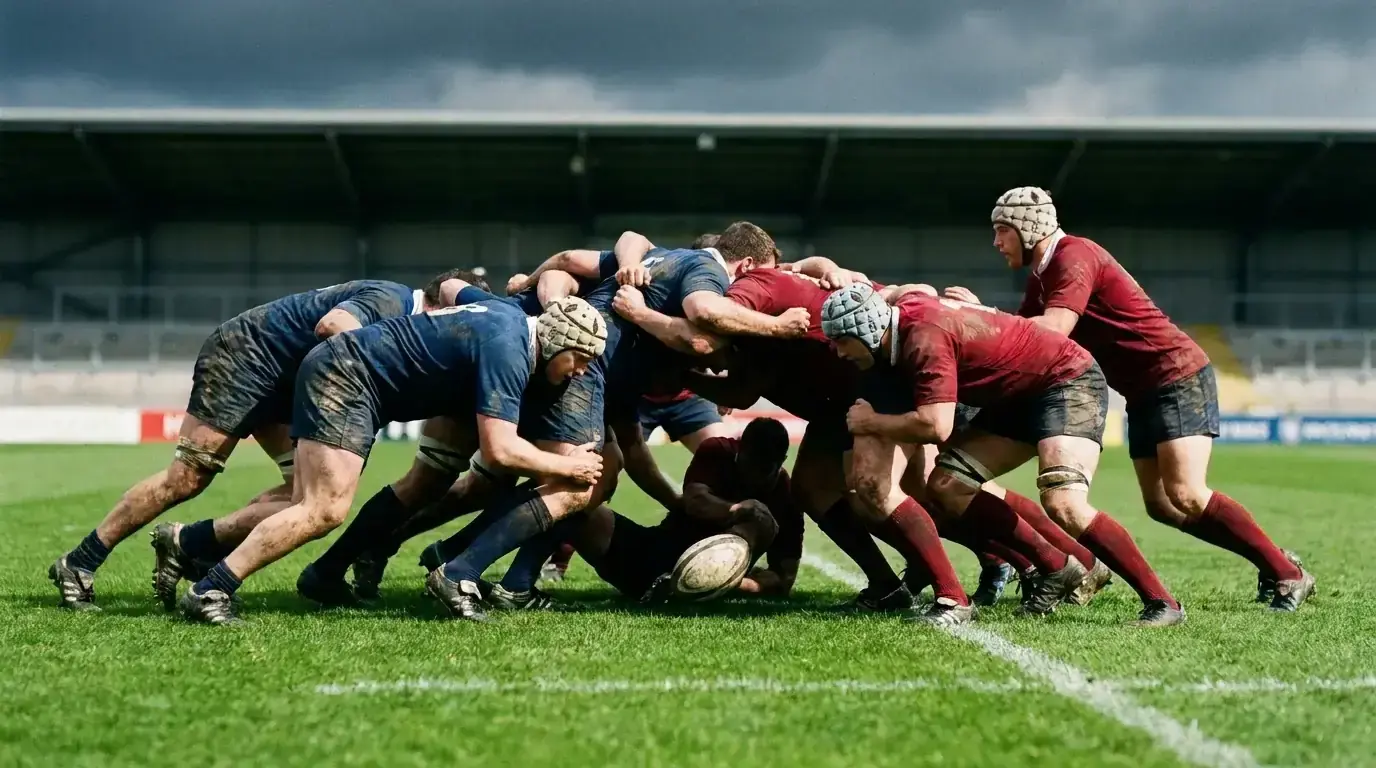
Rugby betting means placing a wager on any rugby event with an odds price attached. The event can be a single Gallagher Premiership match, an outright on the World Cup winner four years out, a player prop on first try scorer, or a futures position on whether England will win the Grand Slam. The wager can settle in ninety minutes or in three years.
The market splits into two big shapes. The first is fixed-odds betting, where you take the price on the screen and your potential return is locked the moment the bet is struck. The second is spread betting, which the UK regulates separately and which pays out proportionally to how far the actual result drifts from a quoted spread. Most people doing what they call "rugby betting" are doing fixed-odds.
Fixed-odds bet — you take a price (say, 1.85 decimal) on an outcome. If it lands, your stake is multiplied by that number. If it doesn't, you lose your stake. The price doesn't change once your bet is confirmed.
Spread bet — the bookmaker quotes a spread on a measurable quantity (say, total points 42–44). You buy or sell. Your profit or loss scales with how far the final number sits from where you opened.
Regionally, the market is heavily concentrated. Around half of all rugby betting volume globally sits inside a handful of headline tournaments — Six Nations, Rugby World Cup, NRL, Super Rugby Pacific, the Premiership, Top 14 and the United Rugby Championship. Everything else is the long tail.
For a deeper look at the specific markets the bookmaker desk will offer on any given fixture, my breakdown in rugby betting markets explained walks through each one in detail.
Union and League: Two Codes, Two Pricing Engines
People who don't follow rugby often assume union and league are minor variations on the same game. People who bet on both for a living will tell you they're priced almost as differently as basketball and ice hockey. The codes share a name, a ball shape and a try line. After that the divergence is real, and the divergence shows up in the markets.

Rugby union is the 15-a-side game most casual viewers know from the Six Nations and the World Cup. The Rugby World Cup 2023 in France pulled 1.33 billion viewing hours, a 19 percent jump on the previous tournament, and that scale of audience keeps union the larger of the two codes in pure betting volume across Europe and the southern hemisphere. Union has rucks, mauls, lineouts, more set-piece phases, more kicking out of hand, and matches that can swing on a single yellow card.
Rugby league is 13-a-side, runs on a six-tackle structure, has no rucks or lineouts, and produces noticeably higher try counts per match on average. The NRL is the commercial heart of league globally, with total revenue of AUD 845.6 million in 2025 and a combined Australia–New Zealand broadcast audience of 224.2 million viewers, up 9.5 percent year on year. The Grand Final between the Broncos and the Storm pulled 4.55 million viewers — a league record. Andrew Abdo, the NRL chief executive, summed it up: "more people are watching rugby league than ever before. More people are playing rugby league than ever before. Whichever metric you choose, our overall results reflect those core strengths."
| Factor | Rugby union | Rugby league |
|---|---|---|
| Players | 15 per side | 13 per side |
| Structure | Phases, rucks, lineouts, scrums | Six-tackle sets, play-the-ball restarts |
| Average try count | Lower, more variable | Higher, more rhythmic |
| Card impact | Very high (yellow ≈ –3 to –5 pts) | High but shorter sin-bin window |
| Headline markets | Six Nations, RWC, Premiership, Top 14, URC, Super Rugby | NRL, Super League, State of Origin |
| Handicap typical range | ±3 to ±15 | ±2.5 to ±13.5 |
| Bonus point relevance | Central to outright pricing | Not used (different ladder system) |
| Live market behaviour | Slower, swings on set piece | Faster, swings on momentum sets |
For a bettor, the practical consequence is that you cannot use the same mental model in both codes. Union handicaps are wider because the scoring is lumpier and tier-one nations regularly put 40 points on tier-two opposition. League handicaps are tighter and move more smoothly with team news. Try-scorer markets in union lean towards back-row forwards and outside backs in launch plays from set piece; in league, fullbacks and centres dominate the anytime market because of how the line is broken from open play. If you bet seriously in one code, you will still benefit from understanding the other — the same trader who set a Six Nations line on Friday morning will be looking at the NRL board on Friday night.
How Rugby Odds Are Built and What They Hide
How do bookmakers actually decide the price? The honest answer involves a model, a trader, and a margin baked into the number before you ever see it. A rugby price is just a probability dressed up in commercial clothing. If a bookmaker quotes England at 1.67 to beat Italy, they are implicitly saying the chance of an England win is roughly 1 divided by 1.67, about 59.9 percent. Italy at 2.30 implies 43.5 percent. Add those together and you get 103.4 percent. Probabilities can't legitimately exceed 100 percent. That extra 3.4 percent is the bookmaker's margin — the overround or the vig. It is the structural reason long-run mathematics favours the house.

Odds come in three formats and the format you see depends mostly on where you bet. Decimal odds dominate Europe and Australia. Fractional odds remain standard on UK betting slips, especially in retail shops. American odds run on a +/– system common in US sportsbooks. The maths is identical; only the wrapping changes.
The same price in three formats:
| Format | Price | Implied probability | What £10 returns if it lands |
|---|---|---|---|
| Decimal | 1.85 | 54.1% | £18.50 (£8.50 profit) |
| Fractional | 17/20 | 54.1% | £18.50 (£8.50 profit) |
| American | −118 | 54.1% | £18.47 (£8.47 profit) |
Stripping the overround on a typical match line
Suppose Saracens vs Bath is quoted: Saracens 1.55, draw 22.0, Bath 3.20.
Step 1: convert to implied probability. 1/1.55 = 64.5%. 1/22.0 = 4.5%. 1/3.20 = 31.3%.
Step 2: add them. Total = 100.3% overround.
Step 3: divide each by the overround for the bookmaker's "true" implied chance. Saracens 64.3%, draw 4.5%, Bath 31.2%.
Step 4: if your model says Saracens are 60% to win, the price (1.55) is too short — negative value. If your model says 70%, the price is generous and there is positive expected value.
The number you should care about most is not the price itself but the price relative to your own probability estimate. That is the foundation of everything sharp bettors do. Chad Yeomans, head of communications and PR at Betway, captured the bookmaker side of this when he said, of a particularly brutal week for punters, "obviously, for bookmakers, it was a Cheltenham to remember. It's very rare that so many well-fancied shots get beaten, so there was definitely no moaning from our side." Bookmakers price favourites short because favourites win more often, and the margin compounds across volume.
Rugby-specific quirks matter when you read prices. Draws are real outcomes in the 80-minute window in union, unlike in league where Golden Point extra time eliminates most regulation ties. Lineouts and the territorial kicking game are harder for purely data-driven models to capture than possession is in football, which is part of why specialist providers like Oval have started feeding rugby-only feeds into the integrity ecosystem. For a longer treatment of overround mechanics, devigging and closing line value, my piece on rugby betting odds formats goes deeper than this overview can.
Interactive tool
Odds value & overround calculator
Enter a match line to strip out the bookmaker's margin and reveal the fair probabilities. Then test your own estimate against the price to see if there's real value. Works for three-way union lines and two-way league lines.
Fair chance, margin removed
- Expected value per £1 +8.5%
- Offered odds11/20 · −182 1.55
- Fair odds (no margin) 1.56
- Bookmaker margin (overround) 0.3%
The Core Markets You Will See Every Weekend
If you walked up to a bookmaker's screen ten years ago on the morning of a Six Nations match, you would have seen maybe six markets per game. This morning, before England played Scotland in Round Two, I counted 187 on a single fixture. Most of those markets are essentially the same shapes in different costumes, and once you can spot the shape, you can decide whether to bet it or ignore it.

Match-outcome and margin bets together still account for roughly 60 percent of all rugby wagering globally. Everything else is variations on that core: handicaps, totals, props, futures, exotics.
Match result (three-way) — home win, draw, or away win. Standard in union because draws after 80 minutes are common. In league, draws are rare thanks to Golden Point overtime, so many books offer a two-way market with no draw option.
Handicap (line) betting — the bookmaker assigns a points advantage or disadvantage. Ireland –7.5 means Ireland must win by 8 or more. This is the single most-bet rugby market for serious punters because the price moves with team news and it's where bookmaker models do the most work.
Total points (over/under) — the bookmaker sets a line on combined match points. Standard Six Nations lines sit between 40 and 55. NRL lines typically sit between 38 and 48. Weather and recent form move this number.
Winning margin — pick the exact band a team wins by (1–12, 13+, etc). Bigger payouts than the moneyline because you're narrowing the outcome. Hugely popular precisely because it offers a tidy compromise between win/lose simplicity and accumulator-level returns.
First try scorer / anytime try scorer — back a player to score the first try, or any try. Anytime carries lower margin. First try scorer carries some of the highest bookmaker margins on the rugby board, often 25 to 30 percent overround.
Bonus point market — will a team score four tries and pick up the bonus point? Specific to union competitions using the bonus-point system. Different from "team to win by 20+", though correlated.
Half-time / full-time — predict the leader at the break and at the end. Higher returns because you're effectively making two correlated picks. Excellent in matches where a team is expected to start fast and tire.
Player props — run metres, tackles made, line breaks, kicks at goal, player of the match. The fastest-growing category, with margins varying most wildly. Man-of-the-match markets are often loose and worth a careful look.
Outrights and futures — tournament winner, top try scorer, grand slam, wooden spoon. Long settlement period, often months. Markets reprice with every round.
Margin shape matters more than market name. A "handicap" on Saracens –9.5 and a "winning margin" of "Saracens by 1–12" can resolve to the same outcome in many states of the world. A sharp bettor cross-checks implied probabilities across related markets and bets the cheapest expression of the same view.
Not every market is offered on every fixture. A Premiership Friday-night fixture between two mid-table sides might have 60 markets. A Six Nations Saturday in Round Three will have closer to 200. Smaller competitions like the MLR or the Currie Cup will typically have just the core ten or fifteen. Less depth often means less sharp — which can mean more value if you're willing to do the modelling work.
The Tournament Landscape That Sets the Calendar
My phone calendar has nine rugby tournaments pinned for 2026, and on any given Saturday between January and June there will be at least three with meaningful betting volume. The rugby year is busier than non-fans realise, and the busy weeks are when bookmaker models stretch thinnest. That is when value tends to surface.
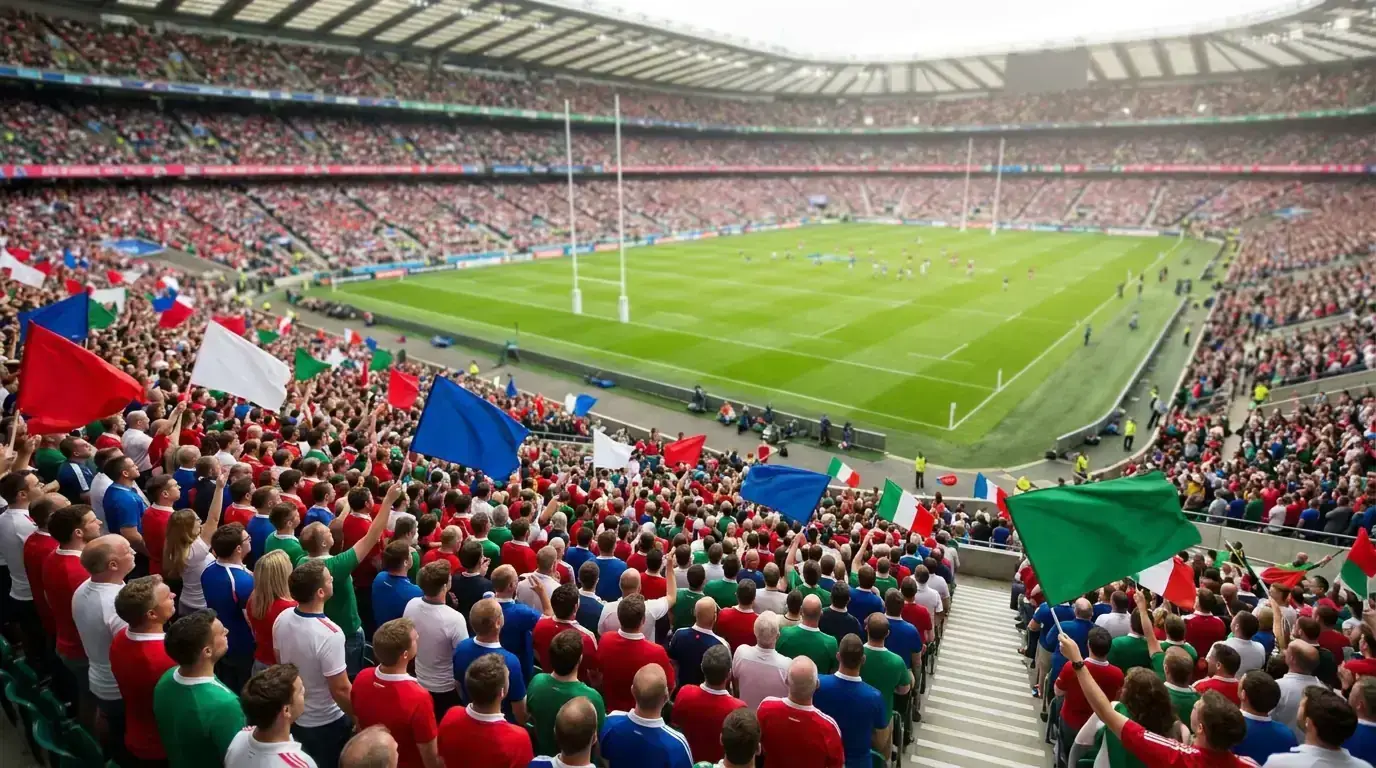
NRL 2025 audience
224.2 million combined Australia–NZ viewers, up 9.5% YoY. Grand Final pulled 4.55 million viewers — a league record.
RWC 2023 viewing
1.33 billion viewing hours globally, +19% on RWC 2019. The single largest rugby viewing event ever recorded.
WRWC 2025 in England
147 million viewing hours globally, +336% on the previous edition. 444,465 tickets sold. Twickenham final drew 81,885 — a world record for women's rugby.
Tournament concentration
Over 50% of all rugby betting volume sits inside the regional flagship tournaments listed below.
The northern hemisphere season runs September through June, with the Six Nations sitting at the centre between February and mid-March. The Premiership, Top 14, URC and the European Champions Cup all overlap. The southern hemisphere club season — Super Rugby Pacific — runs February through June. The NRL runs March through October. The Rugby World Cup is quadrennial; the next men's edition is RWC 2027 in Australia. Betting volume isn't evenly distributed: February to March (Six Nations) and September to October (NRL finals, Rugby Championship, autumn internationals) are the peak windows, and World Cup years amplify everything.
Alan Gilpin, World Rugby's chief executive, summed up the trajectory after RWC 2023, saying the tournament had been fantastic and that as the sport continues to grow and break new markets, World Rugby would work with broadcast partners to enhance the viewing experience, especially for new audiences. That growth is real and it is reshaping markets — sevens at the Olympics, women's rugby, MLR in the US — faster than most casual punters notice. The Women's Rugby World Cup 2025 sold 444,465 tickets, three times the previous edition, with the Twickenham final drawing 81,885 — a world record for women's rugby — and generating 147 million global viewing hours, a 336 percent increase on the previous edition. Women's betting markets are still thinner than the men's equivalent, but they are deepening fast.
If you want the round-by-round calendar with value windows for each competition, the full breakdown lives in my rugby tournaments betting calendar. This section is the map; that one is the GPS.
In-Play Betting and the Reality of Live Rugby Markets
The single fastest-growing part of the betting industry isn't a market or a sport — it's the live in-play category. UK Gambling Commission data for the last quarter of 2024 showed online gross gambling yield rose 21 percent year on year to £1.54 billion, with real-event betting up 38 percent as the dominant driver. That growth is in-play.

In-play rugby is genuinely difficult. Latency is the central problem. The price you see on a streaming app may be two to ten seconds behind the actual match clock. The bookmaker's pricing engine, fed by an official data feed running through specialist providers, sees the event the moment it happens. If you're trying to bet a momentum swing on what you can see in your living room, you are betting against information the bookmaker already has and you don't.
The single rule that has saved me the most money in twelve years of in-play rugby betting is this: if I can't articulate, in one sentence, what I know that the bookmaker doesn't, I don't bet. Most "feel" bets in live rugby are bets against the trader's information advantage.
That said, in-play has real edges if you do the work. Card decisions in union — particularly the 20-minute red card laws operating in 2026 — create market dislocations because not every bookmaker reprices at the same speed. A red card in the 30th minute changes the entire shape of a match, and the line takes anywhere from 30 seconds to four minutes to fully settle. If you have a sharp view on how much a card actually shifts win probability in a given matchup, you can act inside that window.
Territory and phase signals matter more in rugby in-play than goal counts do in football. A team camped on the opposition five-metre line for five phases is statistically far more likely to score in the next 90 seconds than the team defending. The over/under markets often lag this signal by a phase or two. Half-time totals can be a profitable angle in the right matchup, particularly when one side has dominated territory but failed to convert pressure into points before the break.
In-play encourages tilt. The bet you regret is almost always the one you placed three minutes after the bet you lost. Setting a hard limit on the number of live bets per match — I use three as my personal ceiling — keeps the impulses constrained.
Regulation Across the Major Rugby Markets
A reader in Bristol emailed me last March asking why his Saturday in-play bet on Bath had been rejected at exactly 5pm. The answer was a combination of whistle-to-whistle advertising rules, an account verification flag, and a deposit-cap setting he'd forgotten enabling. Regulation is the most boring part of rugby betting and the part that catches the most people out. Here is what matters for the four big rugby markets in 2026.

In the UK, the Gambling Commission is the regulator. Online gross gambling yield from licensed operators reached £1.45 billion in Q1 of the 2024–25 financial year (January to March 2025), up 7 percent year on year, and total industry GGY for April 2023 to March 2024 hit a record £15.63 billion. Operators must be UKGC-licensed to take bets from UK customers. Affordability checks and mandatory deposit-limit prompts apply by extension to wagering accounts. Average monthly active accounts at the largest UK operators reached 12.7 million in Q1 of the 2025/26 financial year — a useful indicator of how mainstream online betting has become.
In Australia, the regulatory picture is materially different. The Interactive Gambling Act sets the federal framework, with state regulators handling licensing. The total sports-betting market in Australia hit roughly AUD 8.32 billion in 2025, on track for explosive growth — forecasts put the figure at AUD 61.27 billion by 2035 at a 22.1 percent CAGR. Credit cards have been banned for online gambling since August 2024. ACMA, the Australian Communications and Media Authority, runs enforcement, and in the fourth quarter of 2024 alone investigated 301 complaints and referred 75 illegal sites for blocking. BetStop, the national self-exclusion register, had 35,671 people registered by the end of Q2 of the 2024–25 financial year, with 26,020 active.
| Jurisdiction | Regulator | Self-exclusion | Notable restrictions |
|---|---|---|---|
| United Kingdom | UK Gambling Commission | GAMSTOP (national) | Affordability checks; whistle-to-whistle ad ban; mandatory deposit-limit prompts |
| Australia | ACMA + state regulators | BetStop (national) | Credit-card ban (Aug 2024); restrictions on in-play markets via remote channels; advertising limits during broadcasts |
| New Zealand | TAB NZ (monopoly) | Self-exclusion via TAB | Offshore betting tax; restricted advertising |
| South Africa | National Gambling Board | Provincial self-exclusion | Provincial licensing; rugby explicitly licensable |
| United States | State by state | State-level registers | Rugby legal where sports betting is legal; MLR markets thin |
If you're betting in the UK, two practical reminders. First, the GAMSTOP self-exclusion register is independent of individual operator tools and covers all UKGC-licensed sites. Second, since 2018, whistle-to-whistle gambling adverts have been restricted during live sports broadcasts before the 9pm watershed when the event begins before that watershed. You will see meaningfully fewer betting prompts during live rugby coverage than you used to.
The credit-card ban in Australia was the largest single regulatory shift in any rugby-betting market in the last three years. The harm-reduction intent was clear: credit-card spending on gambling correlates strongly with high-risk behaviour.
For a deep treatment of the Australian regulatory framework — ACMA enforcement, BetStop mechanics, state-level rules, advertising restrictions — the dedicated piece on rugby betting regulation in Australia goes further than this overview can.
Integrity, Match-Fixing and Why the Numbers Matter
I was in a press box at the Aviva Stadium in 2022 when an analyst sitting two seats down — a former Premiership flanker, now consulting for an integrity firm — pointed at the live odds board on his laptop and said, "that's a flag, not a market move." A specific player prop had moved against a usually quiet pattern. Nothing came of it; the data turned out to be benign. But the moment stuck with me because it captured something most casual bettors don't think about: there is an entire industry of human and algorithmic monitoring sitting behind every rugby market.

Sportradar, the largest single integrity-monitoring company in global sport, monitored more than one million events across 70 sports in 2025 and flagged 1,116 suspicious matches. The 2024 figure was 1,108 — itself a 17 percent decline on 2023. World Rugby sits among Sportradar's 330-plus global integrity partners. The International Betting Integrity Association tracks more than 1.5 million matches across 80-plus sports each year; in 2025, IBIA data led to sanctions affecting 54 matches and 24 players, teams or officials.
Khalid Ali, CEO of IBIA, explained the philosophy when Oval — the only data provider specialising exclusively in rugby — joined IBIA as an Associate Member in 2026: "We are pleased to welcome Oval to IBIA. Specialist data from sports such as rugby plays an important supporting role in understanding sports and betting environments. By bringing together organisations with complementary expertise, IBIA strengthens its ability to detect and address suspicious betting activity and to protect the integrity of sport." It is the first time a rugby-only data feed has been fully integrated into the global suspicious-activity reporting pipeline.
The World Rugby Integrity Unit and the Rugby World Cup anti-corruption programme have been recognised by the United Nations Office on Drugs and Crime (UNODC) in its Resource Guide on Good Practices in the Investigation of Match-Fixing as a best-practice case study. It is one of the very few sport-specific integrity programmes to receive that UN recognition.
The "Keep Rugby Clean" campaign that World Rugby runs alongside major tournaments is the visible face of integrity culture inside the sport. Gabby Cantorna, USA centre, framed it during the 2025 tournament: "Keeping rugby clean protects the integrity of the sport. Rugby is for all and rugby allows for all different shapes and physiques to play." She added the practical layer that resonates with bettors: "It's really important to have that message, especially for younger athletes coming through. If you cut a corner, it will always come back to haunt you at some point. So do it the right way and have that bit of integrity."
For a bettor, the practical takeaway: odd-looking line movement is almost always benign. Genuine fixing alerts are rare, and when they happen, the entire ecosystem moves on them quickly. If you ever do notice a market behaving strangely, IBIA's reporting channels and the World Rugby Integrity Unit both accept bettor reports. That is not paranoia; it is part of how the sport stays priced honestly.
The deeper picture of Sportradar's UFDS AI system, the World Rugby Integrity Unit, sevens-specific risks, and what bettors should know about reporting suspicious markets is covered in rugby betting integrity and match-fixing.
Bankroll Discipline Before Any Bet Goes On
Three years into my modelling work I had a strike rate I was proud of — around 56 percent on handicaps with positive expected value — and I still finished one Super Rugby season down 14 percent. The reason was staking. I'd been varying my stakes wildly on "stronger" picks and the variance ate the edge. Bankroll discipline is the difference between a winning model and a winning bettor. They are not the same thing.

Your bankroll is money you have already accepted you might lose. It is not next month's rent. It is a defined pot that exists only for wagering and that can survive a 30 percent drawdown without changing your behaviour. Without that mental separation, every bet you place is contaminated by the fear of losing money you needed for something else.
Before any rugby bet leaves the slip
- Is my stake a fixed percentage of my current bankroll, calculated within the last 24 hours?
- Do I have a documented reason for the bet that includes my probability estimate, not just a feeling?
- Is the bookmaker's implied probability lower than my own estimate by at least a working margin (say, 3 percent)?
- Have I checked at least one other operator for a sharper price on the same selection?
- Is this bet inside my pre-set weekly count limit?
- If I lose this stake completely, does my next bet's decision change?
- Would I be willing to publish this bet and my reasoning publicly, before settlement?
Unit sizing is the practical mechanism. A unit is a fixed percentage of your bankroll — typically between 1 and 3 percent depending on your edge and your risk tolerance. If your bankroll is £1,000 and your unit is 2 percent, every standard bet is £20. Where bettors get into trouble is "I really like this one" stakes — pushing to 5 or 10 percent on selections that feel strong. They feel strong because of confirmation bias.
Why flat staking beats variable staking on a positive-EV portfolio
Suppose you have 100 bets in a season, each priced at decimal 2.00 (50 percent implied) and each genuinely a 53 percent winner. Bankroll £1,000.
Flat 2 percent (£20) per bet: expected return ≈ £120 profit, drawdown rarely exceeds 8 percent.
Variable 1–6 percent based on confidence: expected return marginally higher in theory, but a single bad 6 percent bet during a losing streak can trigger a 25 percent drawdown that ruins decision-making for the next ten bets.
The Kelly criterion is the formal mathematical answer to optimal staking under positive EV. Full Kelly is too aggressive for most rugby bettors because our probability estimates are rarely accurate enough to justify the variance. Fractional Kelly — typically a quarter or a half — is closer to what experienced punters actually use.
Record-keeping is the part nobody enjoys and nobody who lasts skips. A spreadsheet with date, fixture, market, stake, price, expected value at time of bet, result and closing line is enough. Three months of that data tells you more about whether you have an edge than three years of memory ever will.
The Mistakes That Quietly Drain Most Rugby Bettors
The mistakes don't look like mistakes when you make them. They look like reasonable decisions a reasonable person would make on a Saturday afternoon. After a decade of reviewing punters' staking records, I can tell you the same eight patterns explain about 90 percent of the losses I see — and most have nothing to do with rugby knowledge.
Richard Bryan, Rugby Director at the Rugby Players' Association, made a comment that resonates here even though he was talking about integrity rather than punting discipline: "The whole betting integrity issue can't just be a stick that people are beaten with if they fall foul of it — it must be education too." The same logic applies to bettors making basic errors. Most don't know they're making them until they audit their own records.
Do
- Set a unit size before the season starts and stick to it through winning and losing weeks
- Check at least two operator prices on any selection — line shopping is the highest-EV habit you can build
- Track closing line value as a leading indicator of long-run results
- Specialise. Two competitions you understand deeply beat eight you follow casually
- Walk away after three losing bets in a session
- Treat in-play markets as a different discipline from pre-match
- Log every bet, including the ones you're embarrassed about
Don't
- Chase losses with bigger stakes
- Bet on a match just because it's on television
- Increase your unit size after three wins in a row
- Bet markets you don't understand
- Place a bet because you missed value on an earlier price
- Use credit you can't repay this week
- Treat bonus offers as free money — wagering requirements are sized to net out the offer
The single most common pattern I see in losing bettors' records: stake size increases after wins, then stays elevated into the losing streak that inevitably follows. The fix is mechanical. Recalculate your unit size from your current bankroll once a week, on a fixed day, and don't move it in between.
The second most common pattern is reverse-engineered reasoning. You back a team because you "have a feeling", then construct a justification afterwards. The justification feels analytical. It isn't. Genuine analysis starts with a probability estimate before you see the price. If your "reasoning" only appears after the price, it is rationalisation.
Responsible Betting Without the Lecture
A reader called me last spring after the Six Nations and said, plainly, that he had spent his daughter's school-trip money trying to recover a Wales–Ireland bet that should never have been placed. He wasn't asking for tips. He was asking how to stop. I won't lecture in this section. I will give you the numbers, the names of the tools, and the language to recognise where you might be sitting on the harm curve.

The Household, Income and Labour Dynamics in Australia (HILDA) Survey is one of the most credible long-running data sources on Australian gambling behaviour. The proportion of Australian men placing sports bets rose from 5.9 percent in 2015 to 9.3 percent in 2022 — a 57.6 percent increase in seven years. Among men aged 18–24, participation grew from 10 percent to 17 percent in the same window. The proportion of high-risk problem gambling among male bettors rose from 6.3 percent in 2015 to 8.7 percent in 2022, representing approximately 105,000 men.
The Australian Gambling Research Centre's National Gambling Trends Study found that more than 70 percent of "regular" online bettors — those who place at least one bet per month — reported experiencing gambling-related harm. Young high-risk bettors had median weekly gambling spending of $300, compared to $60 for the average 18–24-year-old bettor. These describe how the harm distributes across a population that, on the surface, looks identical to ordinary punters.
Dr Ferdi Botha, senior research fellow at the Melbourne Institute, framed the wider picture clearly: "This has impacts not only on the men and women who gamble, but their families. For women, their life satisfaction is significantly lower and they are more likely to be heavy drinkers. For men, we see mental health decline and they are much more likely to be in financial stress. The effects of high-risk gambling are deep and far-reaching." Dr Rebecca Metcalf, also at the University of Melbourne, added the relational dimension: "Problem gambling impacts a person's mental health, physical health and relationships. If you are gambling and losing money and trying to hide that, it creates enormous pressures on personal and family relationships."
If you are in the UK and concerned about your own betting, GAMSTOP is the national self-exclusion register and applies to all UKGC-licensed operators. The exclusion is permanent for the duration you select. GamCare runs the National Gambling Helpline, free and confidential, and Gamblers Anonymous holds in-person and online meetings throughout the country. In Australia, BetStop is the equivalent national register; New Zealand and South Africa have similar mechanisms through their respective regulatory bodies.
The most important reframe I can offer: deposit limits, time-out tools and self-exclusion are not for "problem gamblers." They are for everyone who bets. The Australian Gambling Research Centre's study found exactly this disconnect — most bettors saw consumer protection tools as reactionary, useful only for people already experiencing significant harm, when in fact they were designed to be preventative for anyone betting regularly. A deposit limit set when you are calm prevents a decision made when you are not. Setting one is a sign of competence, not weakness.
Questions Readers Send Me Most Often
These are the six questions that turn up most often in my inbox, paraphrased from real reader emails. The answers are the short versions; longer treatments live in the cluster articles linked through this guide.
How does rugby betting work for complete beginners?
You place a wager with a licensed bookmaker on a rugby outcome at a quoted price. If the outcome lands, your stake is multiplied by the price. If it doesn't, you lose the stake. In the UK, you must be 18 or over and the operator must hold a UK Gambling Commission licence. Start with simple match-result and total-points markets before touching anything more exotic. The global rugby betting market is worth around USD 8.26 billion, so the infrastructure to bet legally and safely is well established.
What are the most popular rugby betting markets worldwide?
Match outcome and margin betting together account for about 60 percent of all rugby wagering globally. Handicap (line) betting is the single market sharp bettors focus on most, because pricing is tight and team news moves the line. Total points, winning margin, first try scorer, anytime try scorer and the bonus-point market round out the core menu. Player props are the fastest-growing category. A Six Nations Saturday offers 150–200 markets per fixture; an MLR Friday typically offers 30–50.
What is the difference between rugby union and rugby league betting?
Different sport, different pricing. Union is 15-a-side with rucks and lineouts, lower average try counts and more variance. Bonus points are central to outright pricing. League is 13-a-side with a six-tackle structure, higher try counts, tighter handicaps, and Golden Point overtime eliminates most draws. Card impact is higher in union per minute of sin-bin time. NRL recorded AUD 845.6 million in revenue and 224.2 million combined Australia–NZ viewers in 2025; the Six Nations and Rugby World Cup remain the largest single union betting events globally.
How do handicap (spread) bets work in rugby?
A handicap evens out a mismatch by assigning a points advantage or disadvantage. If Ireland are –7.5 against Italy, Ireland must win by 8 or more for the handicap to land. Italy at +7.5 wins if Italy lose by 7 or fewer or win outright. The half-point is the bookmaker's way of eliminating a "push," when the result lands exactly on a whole-number line and your stake is returned. Lines move with team news, weather and late market activity, sometimes by a full point in the hour before kickoff.
How do bookmakers actually set rugby odds?
A pricing model — increasingly augmented by AI; algorithms now drive odds-setting on more than 55 percent of betting platforms — produces a base probability for every outcome. A trader applies adjustments for team news, weather, public bias and market position. The bookmaker then adds an overround, typically 3 to 8 percent on a major match line and higher on exotics and try-scorer specials. The final number is the trader's probability estimate dressed in a margin that guarantees a long-run profit. Line movement reflects new information and money flowing through the book.
Is rugby betting legal in Australia, the UK and the US?
Yes in all three, with different rules. UK: licensed by the UK Gambling Commission, total industry GGY of £15.63 billion for 2023–24, age 18+. Australia: legal and regulated under the Interactive Gambling Act with state oversight, BetStop national self-exclusion register has 35,671 registrations, credit cards banned for online gambling since August 2024, online in-play via remote channels is restricted. United States: legal where state law permits — most states have authorised sports betting in some form, with rugby markets available wherever a sportsbook offers them.
Where a Disciplined Rugby Bettor Goes From Here
The rugby bettor who is still around in five years won't be the one with the best Saturday hot streak. It will be the one who set a unit size in January and was still using it in October, who logged the bets they were embarrassed about as honestly as the ones they bragged about, and who treated odds as probabilities rather than predictions. The framework I've laid out — what rugby betting is, how the codes differ, how prices are built, what markets to focus on, which tournaments drive volume, how in-play works, what regulation applies in your jurisdiction, what integrity machinery protects markets, how to size stakes and how to recognise harm — is the foundation. The cluster articles linked throughout go deeper on each piece.
The single highest-leverage skill in rugby betting is not picking winners. It is line shopping combined with disciplined unit sizing. Most bettors who lose money over a season have correct opinions and incorrect stake sizes. Get the second part right and the first part starts to compound in your favour.
One final note. The numbers in this guide are real. The market is real, the regulation is real, and the harm is real for the minority who slip into it. The fact that 70 percent of regular online bettors in Australia report experiencing some gambling-related harm is not a fringe statistic — it is the population you are sitting inside the moment you place your first bet. A bettor sets limits before the game starts. A gambler sets them after.
If you take only one thing from this guide into your next Saturday afternoon: write down your probability estimate before you look at the price. Everything else flows from that one habit.
