


What a suspicious match looks like, and why I notice them
I was watching a Currie Cup fixture some years ago — a fairly low-key Saturday afternoon affair on a streaming service that ran three minutes behind the live broadcast — when the handicap line moved twice within the same five-minute window on two unrelated sportsbooks. The match itself was uneventful. The line movement wasn’t. I noted the fixture, filed it in a spreadsheet, and forgot about it until eighteen months later when the same fixture appeared in a Sportradar integrity report as one of several that had triggered the firm’s monitoring thresholds. I have no idea, even now, whether anything was actually wrong with that match. What I know is that the monitoring systems work, that they catch things human pattern-recognition catches, and that rugby — for all the sport’s cultural self-image as cleaner than football or tennis — is not immune.
Sportradar monitored more than 1,000,000 events across 70 sports in 2025 and flagged 1,116 of them as suspicious. That’s the global picture, not the rugby slice, but rugby sits inside it. The job of every betting integrity system on the planet is to turn that pile of monitoring data into investigations, sanctions, and ultimately deterrent effect. The job of every rugby bettor — at least every one who wants to stake money in good conscience — is to understand which systems exist, what they look for, and what an honest market looks like in 2026.
This piece walks through the actual integrity architecture for rugby: who monitors, what they look for, how the major bodies cooperate, and where the structural risks remain unaddressed. The information matters for two reasons. First, you bet better when you understand which fixtures and which competitions carry elevated integrity risk. Second, the sport relies on bettors who recognise suspicious activity to report it. Neither of those things works if you don’t know what to look for.
What match-fixing actually means in rugby
The term “match-fixing” gets used loosely. In integrity work, it covers a spectrum of activities ranging from the catastrophic to the granular. At the catastrophic end is the outright fixing of a match outcome — paying a team or key players to lose. This is what most people imagine when they hear the term, and it’s also the rarest form of integrity breach in elite professional rugby. The economics don’t work cleanly: too many players are involved, the payments would need to be too large, and the sport’s discovery probability is too high relative to the reward.
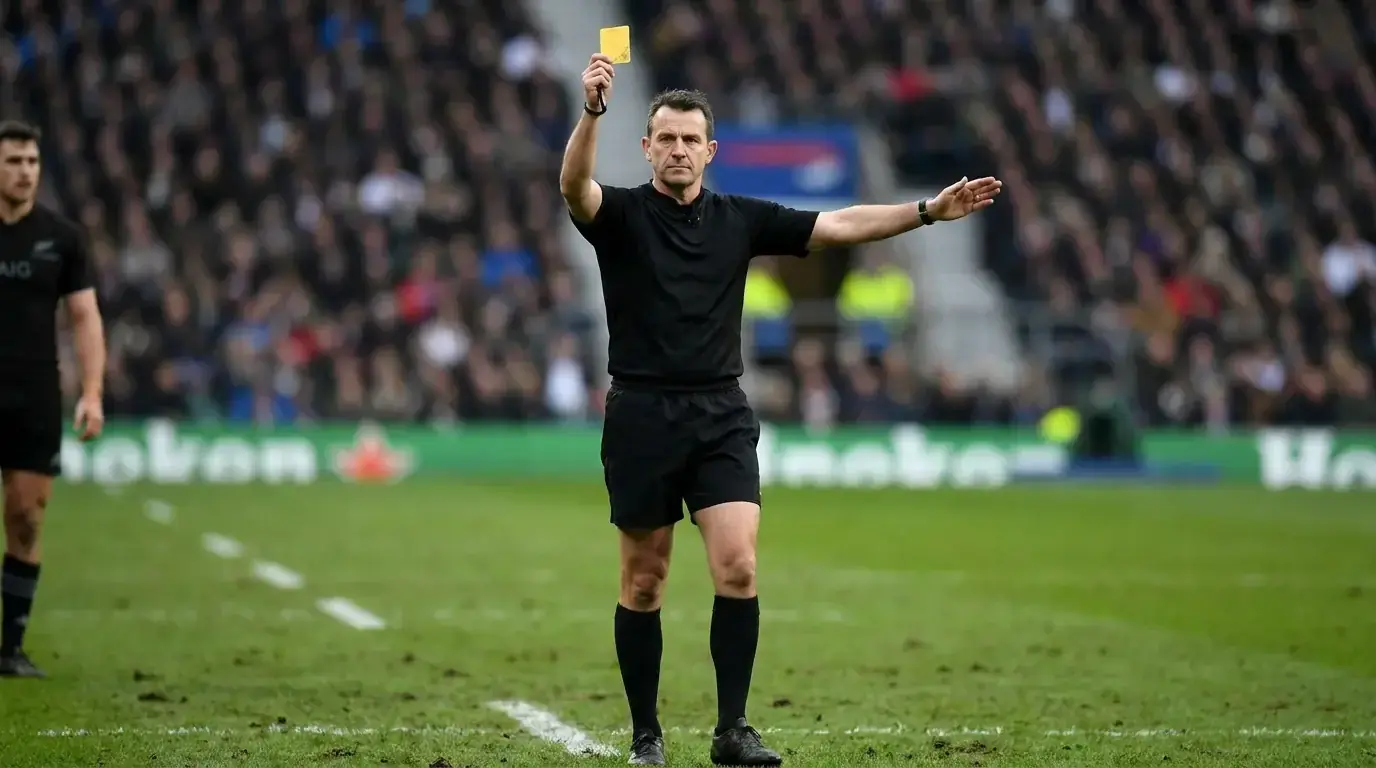
What’s actually more common is spot-fixing — paying a player or official to influence a specific in-game event that’s smaller than the result. A first throw-in. The timing of a yellow card. Conceding a particular kick. Spot-fixing scales better than outright fixing because the individual player has more control over a small event than over the match outcome, the payment can be smaller, and the discovery probability is lower. The integrity systems devote disproportionate attention to spot-fixing markets — first try scorer, first scoring play, yellow card markets — precisely because that’s where the vulnerable surface area lives.
A third category is courtsiding — not match-fixing in the strict sense, but a related integrity concern. Courtsiding involves transmitting in-play information faster than the official broadcast, exploiting the latency between an event happening on the pitch and the bookmaker’s odds updating. It’s mostly an in-play wagering problem and one of the reasons the in-play markets at major rugby tournaments now operate with deliberate latency buffers and tighter monitoring than the pre-match equivalents.
The final category, related but distinct, is insider information — players, coaches, or team staff using non-public knowledge to bet, or to enable others to bet. Squad selection, injury status, tactical plans, weather adaptation strategies. Rugby’s integrity codes prohibit any player, coach, or official from betting on rugby at all, regardless of competition or match. The prohibition exists to remove the temptation for inside-information misuse, and the codes are enforced by the World Rugby Integrity Unit and the equivalent bodies at NRL, RFL, and the national unions.
The 2025 picture: what the data shows
The 2025 integrity data is the most comprehensive global picture rugby has ever had. Sportradar’s annual analysis flagged 1,116 suspicious matches across 70 sports — a number that captures global betting activity rather than confirmed fixes. The 2024 equivalent was 1,108 suspicious matches, which Sportradar reported was a 17% decrease from 2023. Whether 2025’s small uptick is signal or noise depends on which sub-sectors moved, and the firm’s annual report breaks the totals down by sport and competition.
IBIA — the International Betting Integrity Association — monitors more than 1.5 million matches annually across 80+ sports. In 2025, IBIA-led action contributed to sanctions affecting 54 matches and 24 individual players, teams or officials across five sports. The body publishes quarterly alerts to its operator network, which now spans the majority of regulated wagering operators globally. The alert mechanism is the closest thing the industry has to a real-time integrity early-warning system.
Rugby specifically sits within these totals but isn’t the primary driver. Football accounts for the largest single share of flagged matches globally; tennis is consistently the second-largest. Rugby is among the lower-volume sports for integrity alerts in absolute terms, partly because the betting volumes are smaller and partly because the sport’s structural characteristics — fewer high-stakes individual moments, larger squads, slower in-play markets — produce a higher signal-to-noise ratio for monitoring.
The 2025 data also reflects the maturity of the monitoring infrastructure. The systems detecting suspicious activity in 2025 are materially better than those operating five years ago: more historical data to baseline against, better AI-driven pattern recognition, faster cross-operator information sharing. A market move that would have been overlooked in 2018 is increasingly likely to be flagged, reported, and investigated in 2026. The deterrent effect compounds quietly, which is part of why outright fixing in elite rugby remains rare.

World Rugby Integrity Unit and the international architecture
World Rugby is among the 330+ global integrity partners that work with Sportradar’s monitoring infrastructure. The body’s Integrity Unit operates a specific anti-corruption programme during Rugby World Cup tournaments, which has been recognised by the United Nations Office on Drugs and Crime in its Resource Guide on Good Practices in the Investigation of Match-Fixing as a model of practice for tournament-level integrity work. The UN recognition is unusual: most sports’ tournament programmes operate without that level of external endorsement.
The Integrity Unit’s day-to-day work covers player education, monitoring of alerts from external partners, investigation of credible reports, and sanctions enforcement. The sanctions regime allows for lifetime bans, fines, and competition disqualification for confirmed integrity breaches. The most public sanctions of recent years have involved individual players in lower-tier competitions rather than headline international fixtures — which is consistent with the structural pattern that vulnerability concentrates in lower-attention, lower-resource environments.
The Unit also runs the Keep Rugby Clean programme, which is the public-facing education layer of the integrity architecture. The programme runs at every Rugby World Cup — including the men’s and women’s editions — and combines in-tournament education sessions with broader awareness campaigns aimed at players, support staff, and officials. Gabby Cantorna, the USA centre, reflected the spirit of the programme during WRWC 2025: keeping rugby clean protects the integrity of the sport, and rugby is for all and allows for all different shapes and physiques to play. She continued — and this is the part I find most useful as a framing — that it’s important to have that message especially for younger athletes coming through, that everyone should stay on an even playing surface, and that if you cut a corner, it will always come back to haunt you at some point. Do it the right way, she said, and have that bit of integrity.
That framing — integrity as a habit you build over a career, not a rule you check before each match — is the message the Unit tries to embed. The data on whether it works is hard to interpret cleanly, because the counterfactual (what the sport would look like without the programme) doesn’t exist. The general direction of travel is positive: rugby’s integrity record across the last decade compares favourably to several comparable team sports, and the monitoring infrastructure has detected and investigated breaches without major scandals reaching the elite international game.
IBIA, Oval, and the new data partnership architecture
The most interesting recent development in rugby integrity is the 2026 addition of Oval — the only data provider specialising exclusively in rugby — to the International Betting Integrity Association as an Associate Member. The deal is technical-sounding but structurally important: IBIA’s monitoring works best when it has high-quality, sport-specific data feeds to baseline against, and a rugby-specialist provider gives the monitoring better signal in rugby markets than a generalist provider can.
Khalid Ali, IBIA’s chief executive, framed the partnership in straightforward terms: specialist data from sports such as rugby plays an important supporting role in understanding the sports and betting environments. By bringing together organisations with complementary expertise, IBIA strengthens its ability to detect and address suspicious betting activity and to protect the integrity of sport. That’s the dry version. The longer version is that IBIA spent years working with generalist data providers whose rugby coverage was a third-priority of a third-priority — meaning the monitoring was technically possible but the signal was noisier than it needed to be. Oval changes that for rugby specifically.
What this means for bettors is subtle but real. The integrity monitoring on smaller rugby competitions — Major League Rugby, Currie Cup, lower-tier European competitions, secondary national leagues — is now markedly better than it was even two years ago. The “vulnerable surface area” I mentioned earlier is shrinking, particularly in those competitions where the betting volumes are modest but the structural risks are highest. Match-fixers gravitate to environments where the monitoring is weakest, and IBIA’s expansion into specialist data partnerships is the industry’s most credible response to that gravity.

The Oval deal is part of a broader pattern in the integrity sector. Sportradar’s UFDS AI — the firm’s Universal Fraud Detection System, built in-house on more than twenty years of historical data — combines bet monitoring with rapid reporting from operators and education programmes delivered to sports organisations worldwide. The firm summarised its approach when announcing an extended partnership with FIFA: integrity services designed to address risk in a joined-up way, combining bet monitoring through UFDS AI with rapid reporting and prevention programmes. The same methodology applies to rugby, where Sportradar’s relationship with World Rugby extends into player education and tournament-time monitoring.
Sportradar’s UFDS AI and the monitoring layer
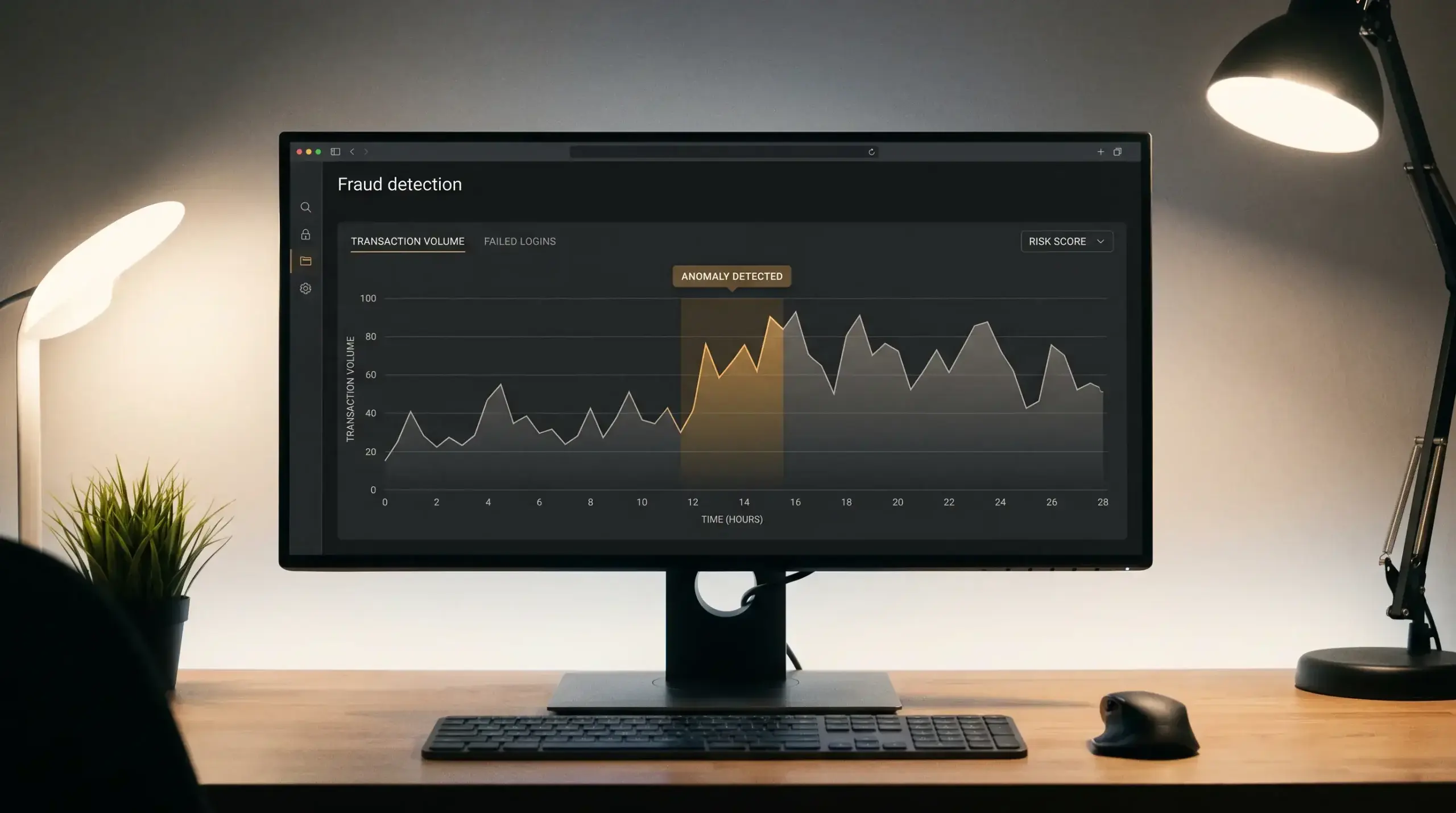
The monitoring infrastructure that catches suspicious matches works on a deceptively simple principle: build a probabilistic model of what normal betting activity looks like for each fixture, then flag deviations from that baseline. The complexity sits in the baseline. A model that’s too generic flags too many normal fixtures (false positives). A model that’s too specific misses genuine integrity breaches (false negatives). The art of integrity monitoring is calibrating that baseline at sub-fixture granularity — by competition, by market, by time-of-day, by operator profile.
UFDS AI does this with twenty-plus years of historical data and continuous retraining on new fixtures. The system monitors aggregate market movement across multiple operators in real time, looks for anomalies that wouldn’t show up in any single operator’s data, and combines that with the operator-side rapid reporting that flags individual large or unusual bets. When the two signals align — anomalous aggregate movement plus unusual operator-side activity — the system escalates to human investigators. Most flagged fixtures resolve as false positives; the small fraction that doesn’t goes to formal investigation.
The system is invisible to bettors in daily practice. You won’t see UFDS AI flagged on a sportsbook screen. What you will sometimes see is the downstream effect: a market suddenly suspended in the hours before a fixture, an operator declining a specific large bet without explanation, or a fixture’s prop markets quietly disappearing while the head-to-head markets remain active. Those are integrity responses in real time, usually triggered by alerts from monitoring infrastructure like UFDS AI.
For honest bettors, the system is a friend. The integrity monitoring is what makes betting on rugby a credible activity in 2026 — the assurance that the markets you’re staking into reflect honest competition. Without that assurance, the entire wagering proposition collapses. Every bettor who’s ever placed a stake on a Six Nations fixture has implicitly relied on the monitoring infrastructure to maintain the conditions in which that stake was a real proposition rather than a charade.
Sevens vulnerability and the structural risk that remains
Not every part of rugby carries the same integrity risk. The format that has consistently drawn the most attention from monitoring bodies is sevens, for reasons that are structural rather than incidental. Richard Bryan, when he was the Rugby Players’ Association’s Rugby Director, put the case bluntly: sevens is a more at-risk environment given the ability for a single individual to have more of an impact on a game and also the areas of the globe it is played in. That was years ago and the structural facts haven’t changed.
The maths is straightforward. In a fifteens fixture, no single player can determine the outcome reliably. The number of touches, decisions, and contests is too large, and a corrupted individual would need too many co-conspirators to influence the result. In sevens, the player count is half, the match length is fourteen minutes, and a single player — particularly a playmaker or a defensive sweeper — can meaningfully affect the outcome of a match through individual actions. The corruption economics are correspondingly different.
The geographic component is also real. The HSBC SVNS Series runs across multiple jurisdictions, some of which have weaker domestic integrity infrastructure than the major fifteens tournaments operate within. Sevens fixtures in regions where local regulatory oversight is lighter create attack surface for fixers that the elite fifteens competitions don’t carry. The monitoring infrastructure — Sportradar, IBIA, World Rugby’s Integrity Unit — is acutely aware of this and concentrates resources accordingly. The 2025 integrity reports flagged a disproportionate share of rugby alerts in sevens and lower-tier competitions, which is consistent with the structural risk profile rather than evidence of widespread fixing.

For bettors, the practical implication is that sevens markets warrant proportionate caution. The variance is enormous, the liquidity is thinner, and the integrity surface is structurally larger than for fifteens. I bet sevens occasionally, in small stakes, and with full awareness that the integrity profile is materially different. I’ve covered the wagering specifics in the sevens rugby betting risks piece; the integrity-specific angle here is that the structural risk is exactly the kind of thing the monitoring systems exist to address, and the existence of the monitoring does not eliminate the risk so much as bound it.
Player education and the human side of integrity
Integrity systems catch breaches after they occur. Education tries to prevent them. The two work together: the monitoring sets the deterrent, the education shapes the decisions players make in the hour before they take a phone call from someone offering money for a specific in-game event. Both pieces have to function for the system to hold.
Richard Bryan, in the same Rugby Players’ Association role, framed the balance directly: the whole betting integrity issue can’t just be a stick that people are beaten with if they fall foul of it — it must be education too. That framing has shaped how World Rugby and the national unions deliver the education layer. Keep Rugby Clean weekends, anti-corruption workshops at age-grade level, mandatory pre-tournament briefings for senior squads, ongoing communication with player unions and agents about new tactics fixers use to approach players.
The education content has evolved meaningfully across the last decade. Early programmes focused on the obvious: don’t accept money, don’t share inside information, report any approach to the appropriate authority. Newer content addresses the subtler scenarios: social media direct messages from accounts that initially appear to be friendly fans, gambling-related debt situations that fixers exploit, the use of family members or close contacts as intermediaries. The threat landscape has professionalised, and the education has had to keep pace.
What I find most useful about the modern education programmes — observing them as an outsider rather than as a player — is that they explicitly frame integrity as a career-long discipline rather than a one-off compliance moment. Players are asked to internalise that any single decision to accept a corrupt approach is a decision they cannot undo, and that the monitoring infrastructure will catch them sooner or later if they take the offer. That framing, more than any specific rule, is what makes the deterrent credible. A player who genuinely believes the system will catch them is a player who declines the offer.
What bettors should know and report
The integrity system relies on bettors as one of its signal sources. Sportradar’s UFDS AI catches aggregate market anomalies. IBIA’s operator network reports unusual large bets. World Rugby’s Integrity Unit investigates credible alerts. But some patterns only become visible to a person watching a specific market closely, and those people — bettors — are sometimes the first to notice that something doesn’t fit.
What does suspicious activity look like to a bettor? Sudden, large pre-match line movement on a fixture without any obvious news justification. Markets being suspended unusually close to kick-off on a competition where suspensions are rare. Prop markets being quietly removed while head-to-head markets remain. In-play behaviour that consistently contradicts the territorial map of the match. None of these on their own confirms anything, but a pattern of them within a single fixture or a single team’s recent matches is worth noting.
If a bettor in the UK genuinely believes they’ve observed suspicious activity, the appropriate route is to report it to the relevant governing body — World Rugby for international fixtures, the RFU or RFL for English domestic, the equivalent national bodies elsewhere — or to the UK Gambling Commission. IBIA accepts reports from operators rather than individual bettors, but the operator-side reporting flow is one of the more responsive channels in practice. Most bettors will never observe something genuinely worth reporting. The fact that the channels exist, and that the monitoring infrastructure exists alongside them, is what makes the system function whether or not any individual bettor ever submits a report.
The honest summary I’d give any rugby bettor in 2026 is this: the integrity infrastructure is the strongest it has ever been, the monitoring is genuinely effective, rugby is not immune but is also not in crisis, and the markets you stake into are credibly clean within the bounds any sport can claim. The risk surface concentrates in lower-tier competitions, sevens fixtures, and competitions in regions with weaker domestic oversight. The major tournaments — Rugby World Cup, Six Nations, NRL finals, Premiership and URC playoffs — operate under monitoring conditions that make systematic fixing implausible. That isn’t a guarantee. It’s the best the industry can offer, and it’s better than the alternative of treating the question as someone else’s problem.
The trust the market actually runs on
Rugby betting works because most matches are honest most of the time. That’s a banal statement and also the foundation of the entire edifice — the monitoring, the education, the sanctions, the international cooperation. Strip out the trust and the markets collapse, the broadcasters lose interest, the audience drifts, and a sport that was painstakingly built into the global game described by Alan Gilpin and others retreats back into a niche pastime in a handful of countries.
The bettors who stake on rugby in 2026 are, whether they know it or not, beneficiaries of a fifteen-year project to build the monitoring and education infrastructure that keeps the markets credible. The same bettors are also the system’s downstream defenders: every honest stake validates the markets, every reported suspicious pattern feeds the monitoring, every conversation about how integrity actually works reinforces the cultural commitment the sport’s coaches and players have built across a generation. That participation is what the system depends on. Knowing how it works is the minimum contribution a serious bettor can make to keeping it working.
