


The competition that breaks every neat pricing model
The first season of the URC after the South African franchises joined produced one of the strangest betting markets I have worked with. Trading desks that had spent years pricing the Pro14 confidently were now trying to price flights from Johannesburg to Belfast against Friday night fixtures in Wales. The lines were all over the place. I made more money in that first URC season than in any single rugby competition before or since, and the reason was simple: the market had not adapted to what the competition had become.
The URC sits in a unique structural position. Four rugby nations, sixteen franchises, three time zones, two hemispheres. Regional ties to over 50% of all rugby betting volume globally still flow through tournaments shaped by exactly these kinds of cross-border dynamics — and the URC compresses more of them into a single league season than any other competition.
Competition shape and what makes it different
The URC runs eighteen regular-season rounds across Ireland, Scotland, Wales, Italy and South Africa, followed by a knockout phase culminating in a final at the venue of the highest-remaining seed. Each franchise plays the others in its conference twice and the opposite conference once, which produces a schedule weighted by geography but not symmetrical across the league.
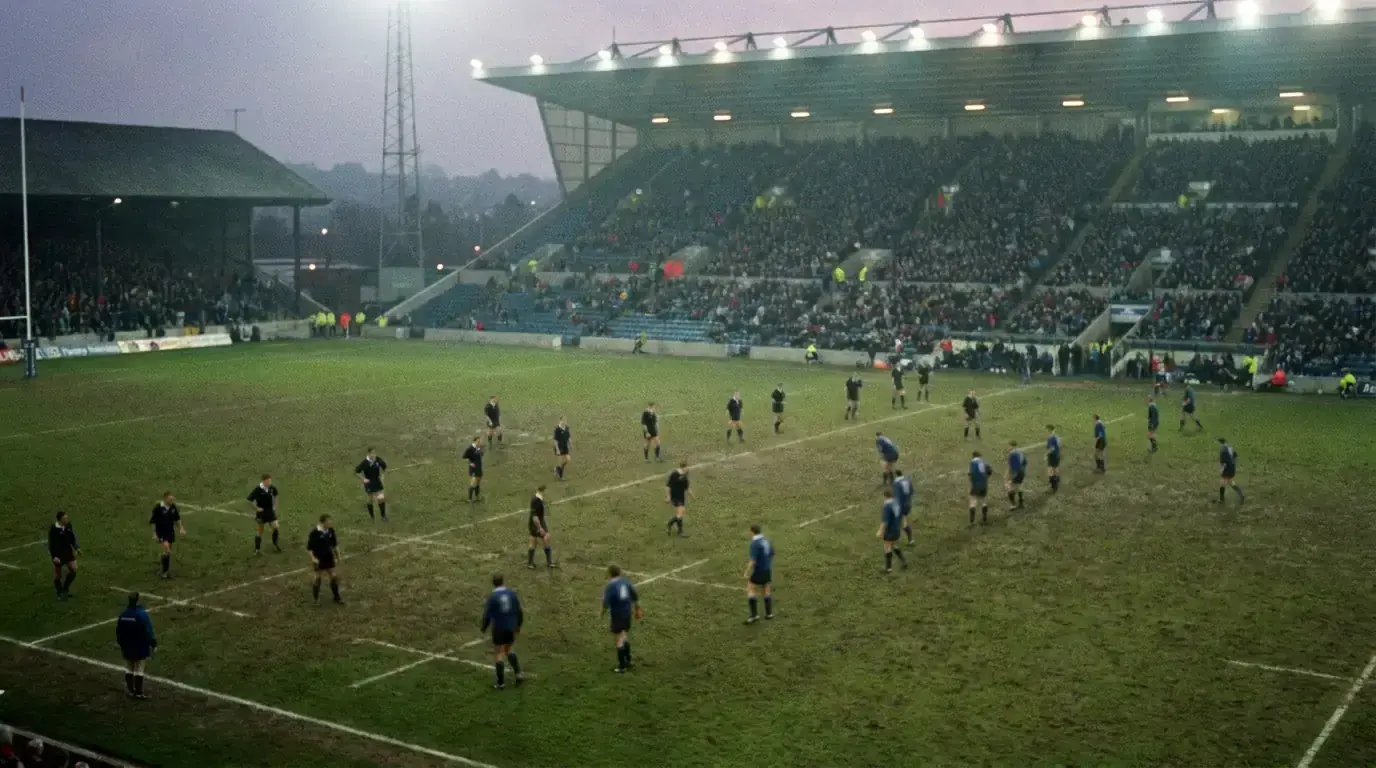
What that means for bettors: the matchup history between any two specific URC sides is thinner than in older, more established competitions. Form lines between the four Irish provinces are sharp; form lines between Irish provinces and South African franchises are still developing. The bookmaker prices each match against a power rating, but the power rating for cross-conference fixtures carries genuine uncertainty that the casual punter rarely accounts for.
The bonus-point system follows the same template as other major competitions — four-point bonus for four tries, losing bonus point within seven points. Regional turnover patterns in the URC reflect bonus-point dynamics differently from Premiership or Top 14, because the league rewards attacking expansion more reliably across its conference structure.
The four shields and the conference pricing
The URC layers four “shield” mini-trophies onto the regular season standings — one for each nation involved (the Italian and South African sides compete for separate national shields). The shields offer a betting market for which side finishes top of their respective national group. These are some of the thinnest markets on the URC board, which means they offer both the most pricing inefficiency and the lowest liquidity.

The Irish Shield is consistently the most competitive of the four because of the depth quality across Leinster, Munster, Ulster and Connacht. The price gap between the Irish Shield favourite and second-favourite is usually too wide given how closely matched the four sides actually are across an eighteen-round season. The South African Shield carries the opposite problem — wide pricing gaps that often reflect genuine quality differences but occasionally overprice the dominant franchise when an underrated South African side gets a kind early-season schedule.
For shield betting, the angle that has worked most consistently: identifying which of the four sides in a national group has the most favourable home-away split in the schedule. Schedule luck matters more in shield races than in the outright title race, because the sample is smaller and the path to a shield often runs through four or five matches rather than eighteen.
The South African travel leg
The global sports betting market grew from $119.26 billion in 2025 to $125.12 billion in 2026, and a meaningful share of that growth has come from the integration of South African rugby into competitions traditionally focused on European clubs. The URC sits at the heart of that integration, and the betting implications are still being properly priced into the markets.

South African franchises travelling to Europe absorb a fatigue penalty that the bookmaker prices — but inconsistently. The first match of a European tour is the most exposed to travel impact; the second and third matches see the touring side perform much closer to expectation as the squad adjusts. Backing against South African sides in the opening match of a European tour has been a steadier edge than I expected when the competition first integrated.
European sides travelling to South Africa face a different challenge. The altitude in Pretoria and Johannesburg matters genuinely — kicking distances change, conditioning matters more, and the matches are played at a different tempo. European sides visiting at altitude have struggled across the past three URC seasons in ways the international betting markets are still adjusting to. The South African home odds against European visitors are often slightly too long, particularly for matches at the higher-altitude venues.
The Irish provinces effect
Leinster have spent most of the URC era as the league’s dominant franchise, and the outright market reflects that. Leinster’s pre-season outright price has been the shortest in the competition every year I have tracked. The trap is that Leinster’s regular-season dominance does not always translate to knockout success, and the outright price priced for the regular season carries genuine playoff risk that the casual market does not fully account for.

The other three Irish provinces — Munster, Ulster, Connacht — produce a different betting pattern. Munster have historically been a side that performs above their power rating in home knockout matches because of the Thomond Park atmosphere. Connacht have been the league’s most consistent producer of upset outright value, particularly in seasons when Leinster lose key internationals to extended summer tour or international windows.
The most consistent edge I have found in URC pricing: outright value on the second-favourite Irish province when Leinster carry a heavy international load. The market prices Leinster on full-strength performance and discounts the rotation impact too lightly. A second Irish province with a quieter international representation often outperforms expectations during the autumn international window specifically.
The playoff bracket and what changes in the knockout phase
URC playoffs are statistically tight, more so than the regular season would suggest. The top eight from the regular season qualify, with quarter-finals at the higher-seeded venue, semi-finals at the higher-remaining seed, and the final at whichever finalist holds home advantage. That structure rewards strong regular-season performances with home-advantage equity that compounds through the knockouts.

The historical pattern is that the eventual URC champion has usually finished in the top three of the regular season, but with one or two exceptions per cycle. Lower-seeded sides that win their quarter-final on the road become genuinely dangerous outright contenders, and the market is slow to update their prices because the public narrative remains anchored to the regular-season picture.
For deeper coverage of how travel patterns affect rugby pricing across competitions, see my work on rugby travel fatigue and odds.
Where the URC continues to mispriced itself
The URC is the major European competition where I am most comfortable telling a serious bettor that the regular market remains inefficient at the margins. The cross-conference fixtures, the South African travel patterns, the schedule asymmetries, and the still-developing form lines between integrated sides all create pricing gaps that older competitions like the Premiership have squeezed out. None of those edges are large enough to bet recklessly, but for a disciplined modeller they are real and they recur.
The competition continues to evolve. Each season, the market adapts a little more. The window where these edges remain open is finite, and the bettors who specialise in the URC now will harvest more value than those who arrive at the market two or three seasons from now when the bookmakers have fully calibrated their models.
