


The three-way moneyline and why it exists in rugby
A confession: I lost a small argument in a London pub last autumn about whether rugby moneylines should include the draw at all. The bloke opposite me, a football bettor by trade, couldn’t accept that any sport offered three outcomes on a head-to-head bet. Then he saw the 28-28 draw between France and the All Blacks the following week and bought the next round.
The three-way moneyline is the simplest rugby market and also the most misunderstood. You’re picking home win, away win, or the tie. In rugby union it’s a genuine three-outcome market because draws happen — rarely, but often enough to be priced. The Six Nations alone has produced multiple draws this decade. Rugby league is different: when a regular-season NRL or Super League match is level after 80 minutes, the result usually stands as a draw, and the moneyline pays out as a three-way bet. In knockout rugby — RWC pool stages aside, where draws count — the market shifts to two-way because golden point or extra time decides things.
The trap most people fall into is taking a short-priced favourite on the three-way line and assuming they’ve bought safety. They haven’t. England at 1.08 against Italy gives you an implied 92.6% probability before the margin, which is honest enough — but it also locks your capital into a return so thin that one upset every twenty fixtures wipes the year. The right way to think about a three-way moneyline is as a sanity-check price, not a vehicle. If the line tells me a side is shorter than 1.20, I almost never bet it straight; I migrate to the handicap, the margin, or the team totals instead.
The draw price is the tell. A well-priced rugby moneyline will quote the draw between 22.00 and 50.00 in a tight international, much longer in a mismatch. When I see the draw under 20.00 in a fixture that isn’t a knife-edge derby, I read it as the book telling me the two sides are closer than the favourite’s price suggests. That’s not always actionable on its own, but it’s a useful cross-check.
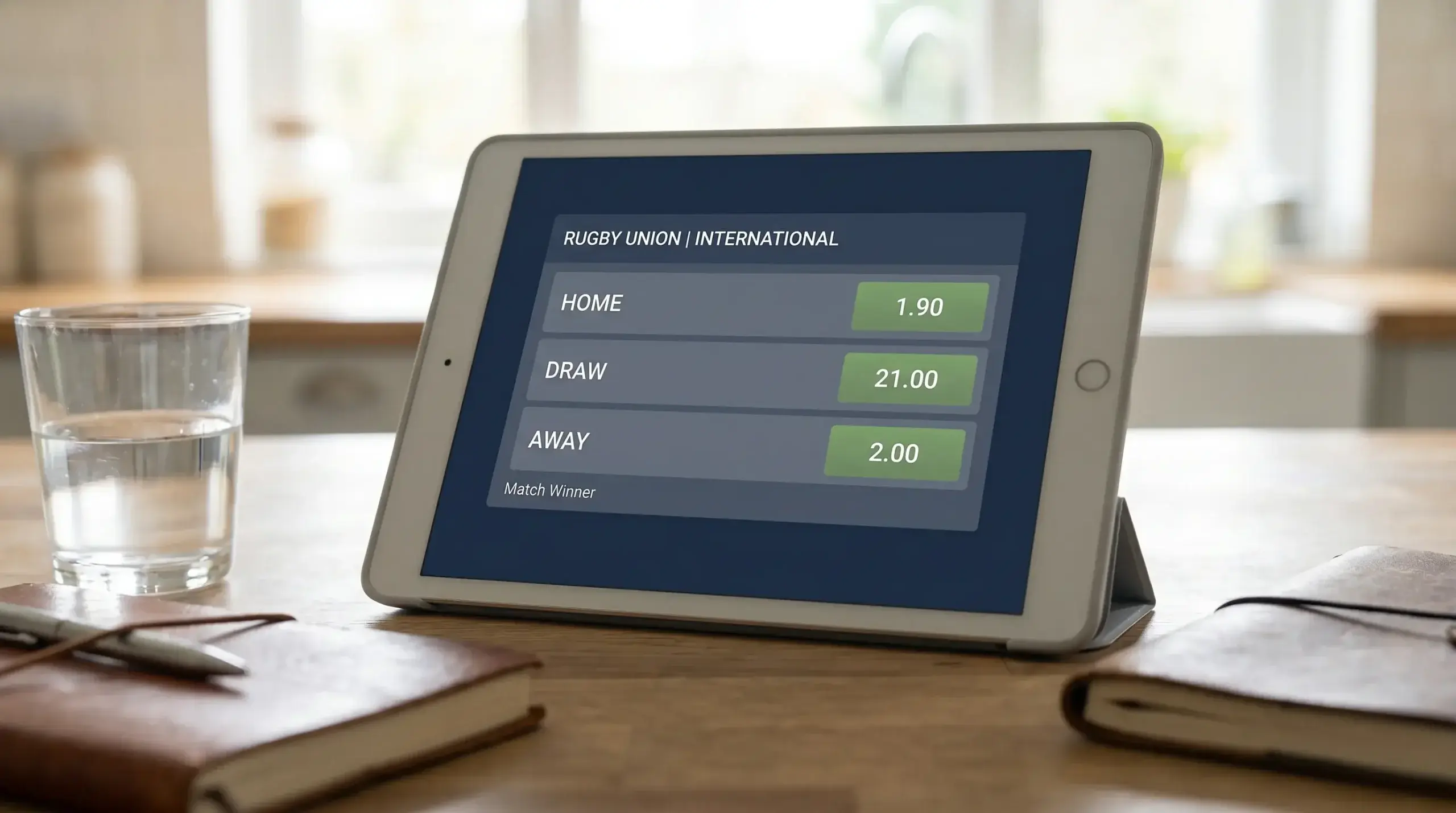
When to use it: when you genuinely believe the underdog wins outright, or when you want a small stake on a draw at long odds in a Six Nations fortress fixture. Otherwise, walk past it.
Winning margin, the market that actually rewards a strong opinion
If the moneyline is a yes-or-no question, the winning margin market is a multiple-choice exam — and the bookmaker’s margin works in your favour the more decisive you can be. The market splits the possible margins into bands (usually 1-12, 13-24, 25+) for each side, plus a draw. Pick the band correctly and you’ll typically get prices between 3.50 and 6.00, which is a different universe to the 1.08 moneyline on the same fixture.
I lean on winning margin in two specific situations. The first is when I think the favourite wins but the handicap looks shaved — say the line is -14.5 and my model has the true margin at +9 to +11. Backing the favourite -14.5 is a coin flip; taking the favourite “1-12 margin” gives me the same opinion in a market where I get paid for being precise. The second is the Six Nations away upset. When my numbers say France travel to Cardiff and win by less than a converted try, the “France 1-12” price is consistently more generous than the under-15.5 totals it sits next to.
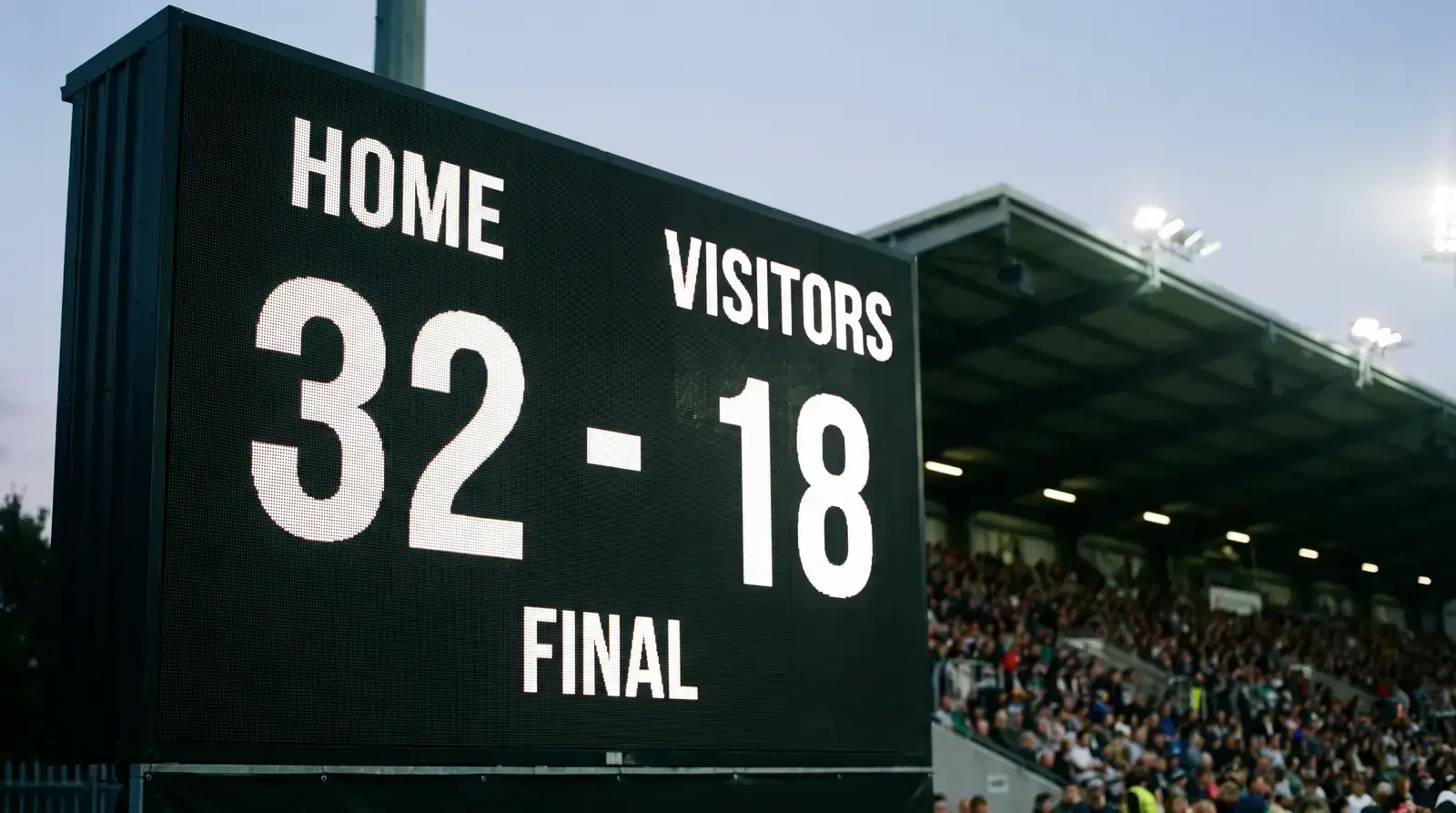
Around 5% of the rugby-betting world stakes on this market according to the volume splits, which is a polite way of saying you’re competing against fewer sharps here than you are on the handicap. That doesn’t make it easy — the bands are wide enough that variance bites — but it does mean the line moves slower and the closing prices are softer.
The market often gets confused with the handicap. They are not the same bet. A handicap pays you whether the favourite covers a single threshold; a winning margin pays you only when the result lands inside a specific band. If you’ve ever taken the favourite -7.5 and watched them win by 24, the handicap rewards you regardless. The winning margin band of 1-12 would have lost. That’s the trade-off — wider payout for narrower windows. I’ve covered the handicap mechanics in more depth in the rugby handicap betting guide, where the line-setting maths gets a fuller treatment.
When to use it: when you have a confident view on the size of the win, not just the winner. Skip it when your opinion is “they win by something.”
The bonus-point market and the four-try threshold
Rugby union’s bonus-point system is one of the few rule changes in the last thirty years that genuinely created a new betting market. Score four tries, you get a bonus point in the league table. Lose by seven or fewer, you get a losing bonus point. The market that mirrors this — “Will Team X score four or more tries?” — has become a staple of Six Nations and Premiership weekends, and it’s a market I argue is systematically mispriced.
Here’s the asymmetry. Punters love a yes. The “yes” side of “Team X to score 4+ tries” attracts heavy recreational money on any in-form attacking side, especially Ireland at home, France at home, and any Premiership match involving Bath in 2025-26. That pressure shortens the yes price and lengthens the no. If you’ve sat at a screen watching the yes drift from 1.83 to 1.55 in three days while nothing has changed about the matchup, you’ve watched recreational flow at work.
The no side rewards a specific kind of analysis — defensive structure, weather, set-piece dominance. When wind is forecast above 25 km/h at the Stadio Olimpico, the over-4-tries market for the visiting side is a defensible no even when their attacking numbers say yes. Same for any URC fixture in Belfast in February. The losing bonus-point market is even better hunting ground: it’s quoted on most fixtures but the public almost never touches it, and the implied probability often diverges from a sensible margin model by three to five percentage points.
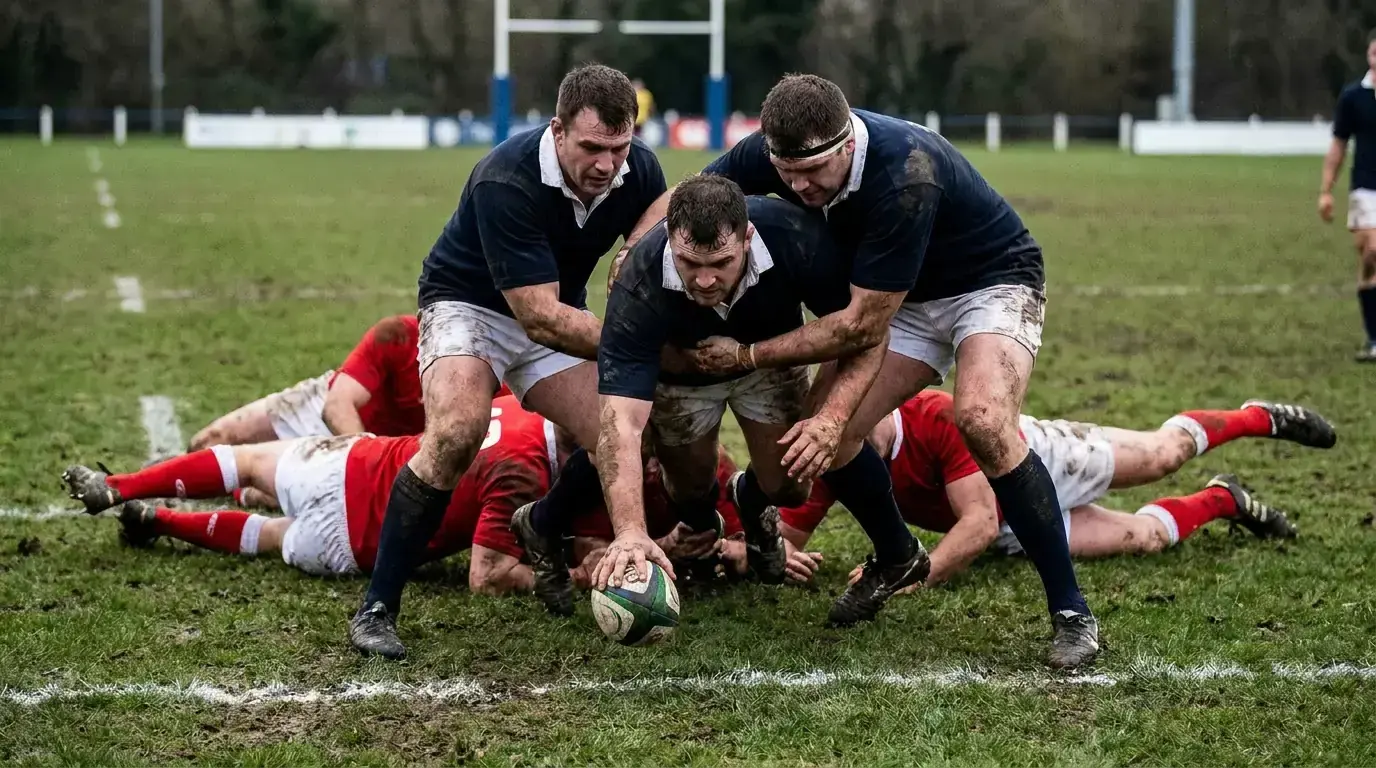
One operator habit to watch. The 4-try market is occasionally settled differently depending on how penalty tries are counted — some books treat them as standard tries, others have idiosyncratic rules buried in the small print. Read the settlement terms before you stake anything substantial. I learned this the hard way during a 2023 Champions Cup quarter-final and now I check every operator’s rugby rules in advance.
When to use it: when you’ve already formed a view on the totals, and the bonus-point market lets you express that view at a better price.
First try scorer, anytime, and the variance you sign up for
I’ll be honest — I bet first try scorer twice a season, both times more from professional curiosity than conviction. The market is a lottery dressed up as analysis, and the bookmaker margin reflects that. A typical first try scorer line carries a built-in overround between 130% and 150%, which means the book is keeping roughly a third of the stake before a ball is kicked. Compare that to a moneyline overround of around 104-106% and you can see why I treat first try scorer as entertainment.
That said, there are angles. The position-by-position try data is publicly available for every major league, and the rates are stubborn. Outside backs score the bulk of tries in rugby union — wings particularly, then full-backs, then outside centres. Forwards score fewer tries but a higher proportion of close-range ones, which means in a tight defensive forecast their first-try price is often more honest than the headline winger’s. If I think a match will be decided by maul tries and pick-and-drives, I’ll look at the second-rows and back-rows long before I look at the speedsters.
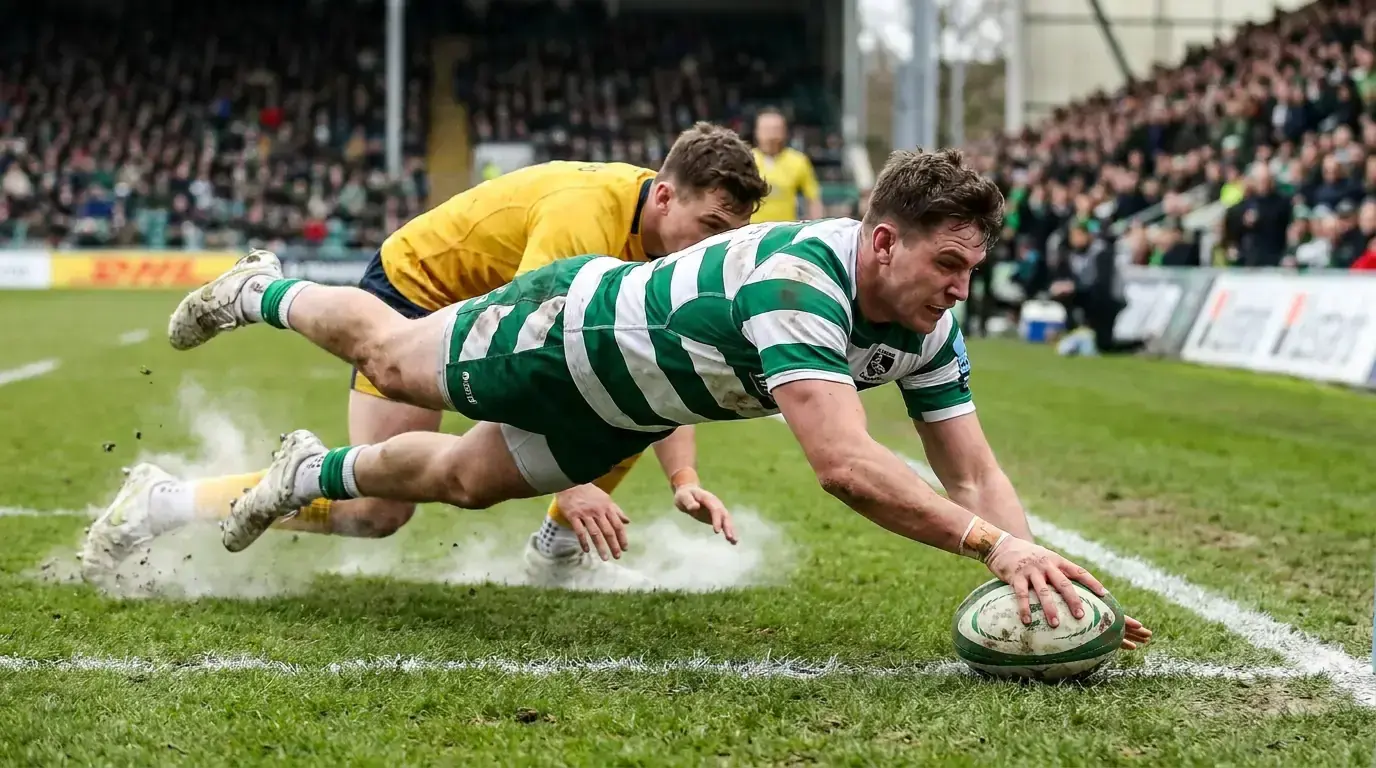
The anytime try scorer market is the saner cousin. Same player pool, much shorter prices, but the overround is friendlier — typically 115% to 125% — and the variance is manageable. I use anytime as a sanity test. If a wing is 5.00 to score first and 1.80 anytime, the book is telling me they expect roughly a 35-40% chance of him touching down at some point. If my view diverges from that, anytime is the cleaner expression of the opinion.
The last try scorer market is the wild card. It’s available on most major fixtures, prices roughly mirror first try scorer, and the analysis is genuinely different: late tries are scored by replacements, fresh legs, and players in position to chase loose ball. I won’t pretend I have an edge here, but I’ve noticed bench impact players price longer for last-try than they should given how often they appear in those windows.
When to use it: when you can swallow the variance and have a structural reason for the pick (set-piece source, defensive matchup, replacement timing). Otherwise, take the holiday.
Half-time/full-time, the market that punishes assumptions
The HT/FT market asks you to pick the leader at half-time and the winner at full-time. Nine combinations exist in rugby union including the half-time draw and full-time draw permutations, fewer in formats where draws are decided by extra time. Prices range from short — favourite/favourite, often around 1.50-1.80 — to lottery-long, with underdog leading at half-time and favourite winning at full-time often quoted at 8.00 or above.
I’ve watched more punters lose to half-time/full-time than to any other rugby market apart from accumulators. The reason is that the human brain is bad at conditional probability. If you think Ireland win at 1.40, you assume Ireland lead at half-time roughly 80% of the time. The actual half-time lead rate for a side priced 1.40 in international rugby is closer to 60-65%. That gap is where the bookmaker hides.
The market that does pay off is the upset half-time read. International rugby in particular has clear first-half identities — Scotland start fast at home, Wales famously fade after the break, the All Blacks tend to build through the match rather than dominate from the opening whistle. The “Scotland lead at half-time, Wales win at full-time” type of bet sits between 6.00 and 12.00 most weekends and matches a stylistic reality more often than the price suggests.
Half-time-only markets are an underrated sub-genre. Many books quote a separate half-time moneyline and handicap with their own overrounds, and on certain fixtures the half-time spread is more honestly priced than the full-game spread. When team news drops a starting hooker on the morning of a Six Nations fixture, the half-time markets often move slower than the full-game markets, which is a small inefficiency worth exploiting on the right day.
When to use it: when you have a stylistic read on how the first half differs from the second. Avoid it as a “double your odds” trick on a side you already fancy.
Player props, performance bets and the Man of the Match market
I want to be careful here because player props are where the industry is moving and where the most marketing noise lives. Stripped of the noise, rugby player props divide into four genuine categories: try scorers (covered above), try assists, run metres and tackles, and discipline (cards and penalties).
Run metres and tackles are the props worth taking seriously. The lines are based on tracking data — most leagues use the same providers, and AI-driven pricing now sets initial lines on more than half of all sportsbook platforms before any human trader looks at them. That algorithmic baseline is competent but it isn’t tactical. It doesn’t know that the opposition’s defensive captain has been struggling with line speed, or that the home side’s game plan tonight is to attack down the right edge where the visitors’ winger is making his Premiership debut.
I’ve had my best long-run results on tackle props for back-row forwards in defensive-minded fixtures, and on run-metres props for the dominant ball-carrying forward in any match where the opposition’s tackle technique has been visibly slipping. Both reads require watching games rather than scrolling team-news Twitter on a Saturday morning. There’s no shortcut.
Man of the Match — Player of the Match in most operators’ parlance — sits closer to first try scorer in spirit. The market is broad, the overround is brutal, and the winner is often someone whose name you didn’t have on your shortlist. Andrew Abdo’s annual review of the NRL noted that more people are watching rugby league than ever before — the audience growth feeds into prop liquidity, which in turn drives operators to expand POM markets, which in turn pushes prices in directions you wouldn’t expect a year earlier. Sharper liquidity is a double-edged sword: better prices in theory, faster line moves in practice.
When to use it: tackle and run-metres props when you’ve watched the fixture you’re betting and have a specific structural read. POM markets, only with small stakes for fun.
Exotics and the specials that occasionally pay rent
Method-of-first-score. Race to ten points. Will there be a yellow card. Total drop goals. The exotics column is the longest on any rugby sportsbook menu and the worst place to learn the basics of the sport. It’s also, occasionally, where the genuine edges hide.
Method-of-first-score is the one I watch closest. The market typically splits into try, penalty, drop goal, no score (in the relevant window), and sometimes a “free kick” option. Penalty prices on this market are sometimes too long against sides with notoriously indisciplined opening minutes. England’s first-quarter penalty count in away Six Nations fixtures has been a useful indicator over the last three cycles.
Race-to-X markets are less interesting because they collapse into a moneyline once you adjust for time-to-score, but the in-play versions during the first quarter can occasionally price the leading side too short when the territory map says the other team is camped on the line. Worth a watch, rarely worth a stake.
Yellow-card markets are weather- and referee-dependent. Certain referees in international rugby card heavily, others rarely card at all. The published referee for a fixture is one of the few pre-match factors that genuinely moves the card market, and the public doesn’t read referee form. That’s a small, persistent edge that doesn’t appear in the moneyline or handicap.
The general rule with exotics: only stake what you’d lose for fun. The overrounds are punishing, the liquidity is thin, and most operators void or limit exotics aggressively when they smell sharp money. If you’re using these markets to learn the texture of the sport, that’s fine. If you’re using them to grind a profit, you’ll burn the bankroll faster than you’ll build it.
Choosing the right market for the read you actually have
Every Saturday I look at the fixture list and ask the same question for each match: what’s the cleanest expression of my opinion? Not the most exciting, not the longest price — the cleanest. If I think Leinster will hammer Connacht by twenty in a URC opener, the cleanest expression is the winning-margin band, not the moneyline and not the over-12.5 handicap with the half-line. If I think the Springboks will scrape past Argentina in Mendoza by less than a converted try, the cleanest is the draw-no-bet or the underdog +6.5 handicap, not the moneyline.
This sounds obvious. It’s not. Most recreational bettors I know use one or two markets for every fixture — usually the moneyline and an accumulator — because those are the columns the sportsbook puts first on the screen. Online betting is now 78.2% of the global sports-betting market, which means almost everyone reads the same prices on the same screens, and the markets at the top of the screen get the most attention and the thinnest margins. The deeper you go into the menu, the less crowded the trade.

The matrix I keep on a Post-it next to my monitor reads like this. Confident on the winner, uncertain on the margin: moneyline or draw-no-bet. Confident on a specific margin: winning-margin band. Confident the favourite covers but unsure of the exact number: handicap. Confident on the style of play: bonus-point market, totals, or method-of-first-score. Confident on a specific player matchup: tackles or run-metres prop. Confident on referee identity: yellow-card market. Confident on nothing: don’t bet.
That last line is the one I follow least often and lose the most money ignoring. The discipline of skipping a fixture isn’t a betting strategy. It is the betting strategy.
