


The moment that taught me to respect the delay
I was watching a Premiership semi-final live in the stands. A try was scored. I pulled out my phone, expecting to bet the live total. The over had already moved — by the time I tapped through, the price had shifted six points and the value was gone. Somebody watching the same broadcast through a different feed had got there before me. That single moment redefined how I think about in-play rugby betting. The pace of the market is now faster than the human reaction time of a casual punter watching a delayed broadcast.
UK online GGY rose 21% year-on-year in Q4 2024, driven primarily by real event betting up 38%. That growth is in-play betting growing into its commercial peak. The window in which a recreational punter can outpace the market on a live event has narrowed dramatically over the past five years, and continues to narrow. Knowing where the remaining edges live is the only sustainable approach.
How in-play markets actually shape themselves
Live rugby markets are built around the official match data feed — usually Sportradar or a competitor — that updates within seconds of any meaningful event. The bookmaker’s model consumes that feed and re-prices instantly. By the time a casual punter sees a try on television, the in-play moneyline, totals and handicap markets have already adjusted.
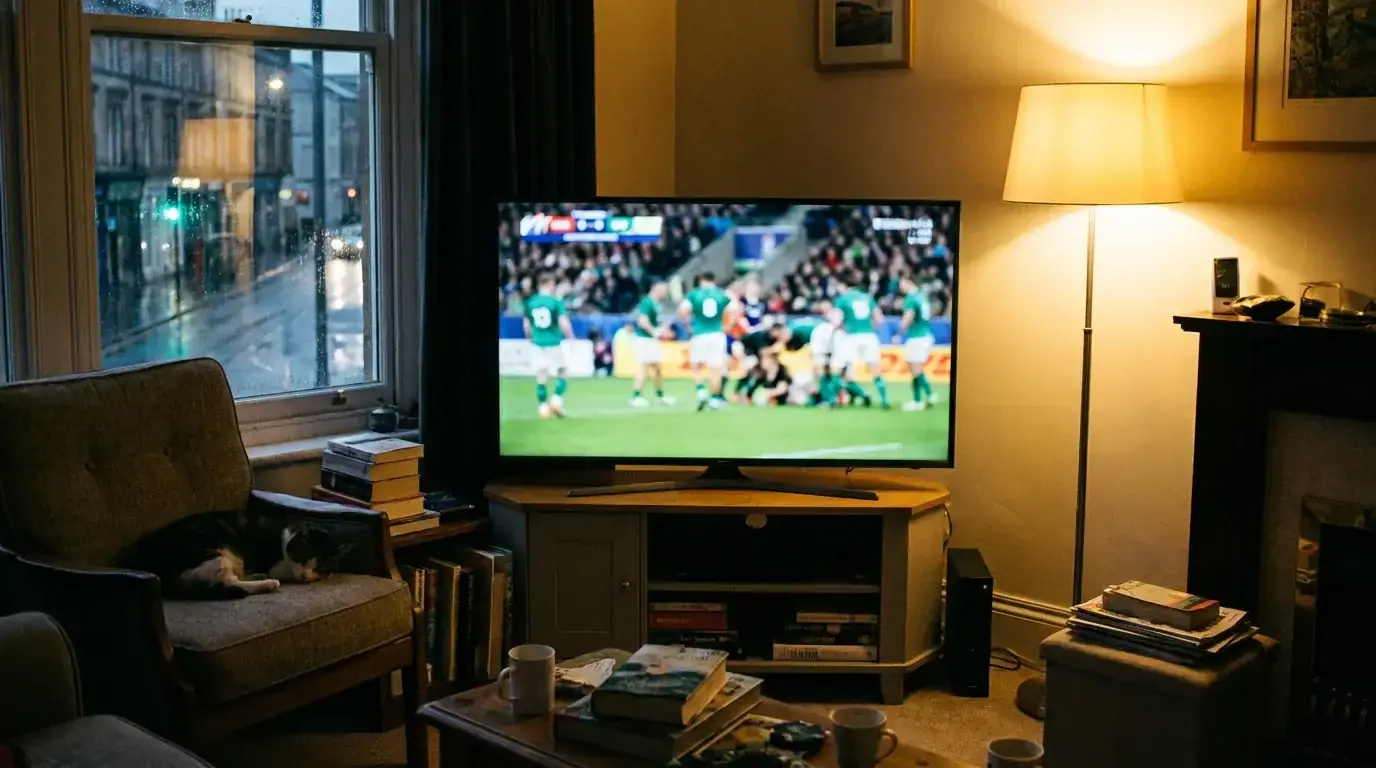
The online share of global sports betting reached 78.2% in 2024 and continues to grow. That share is overwhelmingly driven by live in-play wagering rather than pre-match betting. The infrastructure behind these markets — data feeds, automated pricing engines, latency-optimised mobile apps — represents serious technical investment by every major operator. Trying to beat that infrastructure with intuition is a losing proposition.
What works instead: anticipating market reactions before they happen. A red card carries a known probability distribution of impact on the final score. The market re-prices instantly to the median outcome of that distribution. Bettors with a sharper view of the tails — knowing when a particular red card will produce a wider swing than the median — can position before the next price move arrives.
The phase and territory signal
The single most useful predictor of in-play scoring is field position over the previous three to five minutes. Rugby is a territorial sport, and sustained pressure inside the opposition twenty-two produces points at a much higher rate than dispersed possession across both halves of the field. The bookmaker prices recent events; the model that watches phase patterns and field position can sometimes see scoring opportunities before they materialise on the scoreboard.

The trick is distinguishing genuine pressure from cosmetic pressure. A side carrying the ball through ten phases inside the opposition twenty-two with no try threat — passing sideways, knocking on, conceding penalties — is not the same as a side breaking the gain-line every other phase. The visual signal is similar; the actual scoring probability is very different. Watching the rugby carefully, not just the scoreboard, is what produces this kind of read.
Live in-play totals markets respond to scoreboard events, not to underlying scoring threat. That gap is real value when the underlying threat is significantly higher or lower than the scoreboard suggests. Sides launching repeated red-zone attacks without converting often produce a try in the following five minutes; the in-play total often hasn’t moved to reflect that probability. Conversely, sides defending heroically in their own half are about to concede regardless of the next phase outcome.
Pressure points in a rugby match
Three moments in any rugby match produce disproportionate market reactions. The first is the period immediately after the first try — the totals market over-reacts to the realised score and underprices the rate at which the second and third tries follow. The second is the ten minutes either side of half-time, when fatigue dynamics begin to assert themselves and the trailing side often opens up. The third is the final fifteen minutes, when bonus points become tactical drivers and the leading side either closes out or capitulates.
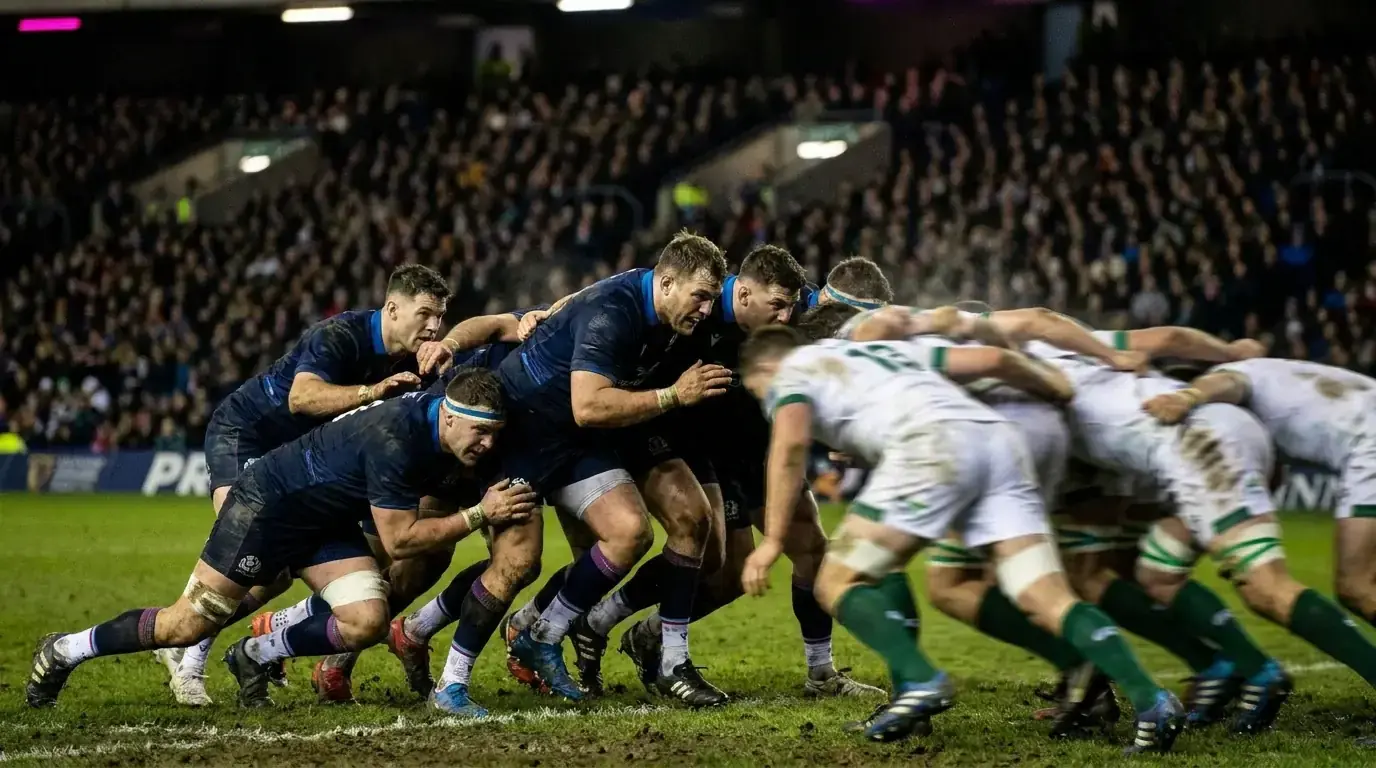
Live moneyline markets are usually most efficient in the first hour of a match and least efficient in the closing twenty minutes. By the time a match reaches the seventy-minute mark, the bookmaker’s model has reduced uncertainty dramatically, but it has also reduced the range of likely outcomes — which means even small mispricings carry larger relative value. The bettor watching the closing minutes carefully can find positions the morning-line bettor never sees.
The systematic edge across recent seasons: live totals on matches where the first try arrives later than expected. A scoreless first twenty minutes typically drags the total down to a level that overstates the lack of scoring; in fact, late first-half scoring often arrives in clusters as one side breaks open the defensive pattern. Backing the over on low-scoring opening twenty-minute periods has been one of the more reliable in-play patterns I have tracked.
Time decay in live rugby markets
Live odds change as the match clock progresses, but not linearly. The most rapid pricing movements happen around events — tries, red cards, yellow cards, drop goals from distance. Between events, the market drifts slowly as time-to-expiry shortens the window for outcomes to occur. Understanding the difference between event-driven moves and decay-driven moves is the foundation of in-play discipline.
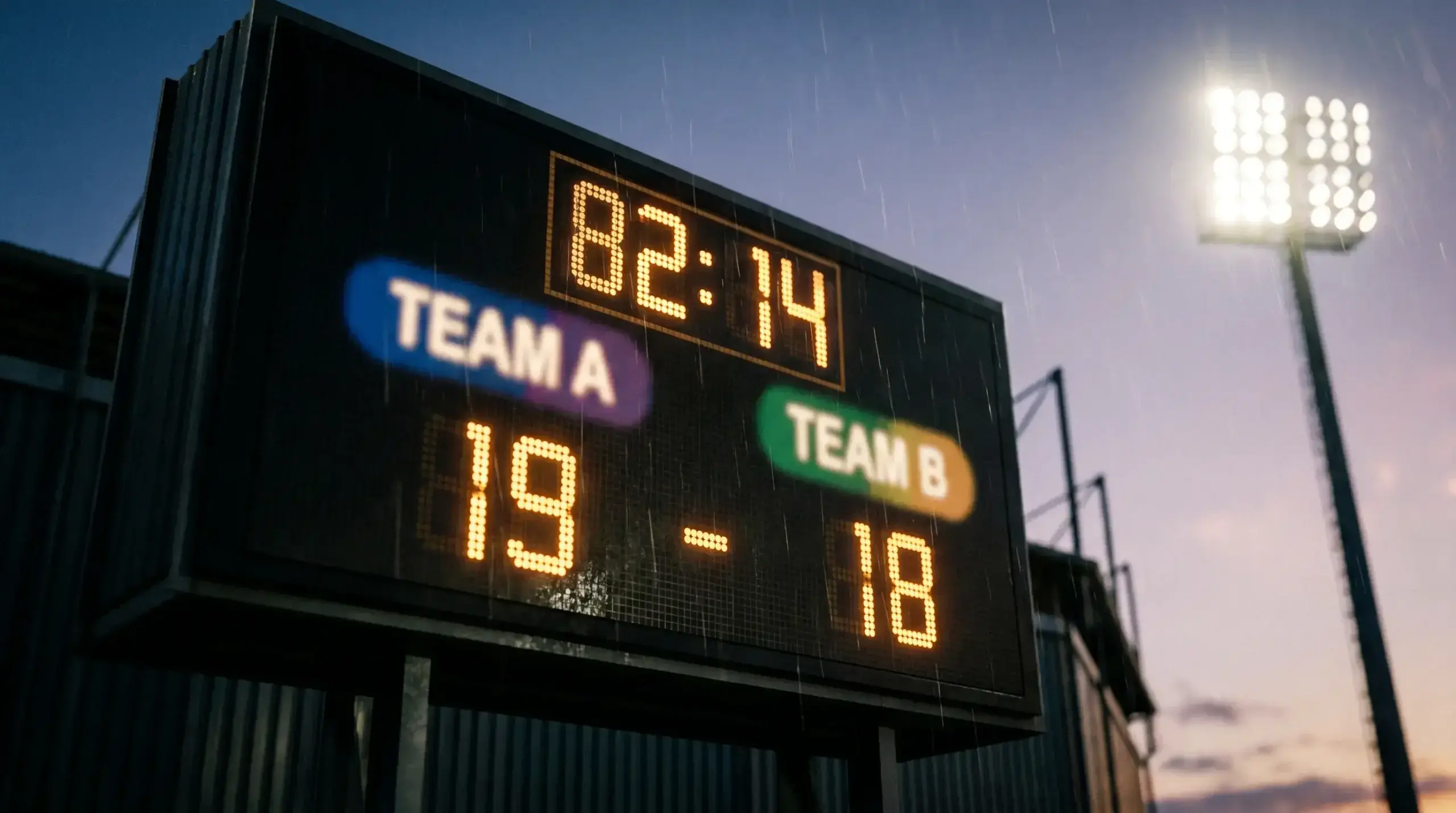
Match-outcome and margin betting together account for around 60% of rugby wagering globally, and a substantial share of that flow now happens in-play. Decay-driven moves on totals markets are particularly important: a match approaching half-time with the score at 7-3 produces a totals price that compresses as kickoff time runs out without scoring. Late first-half tries can swing the totals price violently in the wrong direction for over backers, which is why over positions on totals are usually better established earlier in the match, not later.
Latency and stream delay
Sportradar Group described its integrity infrastructure in 2026 as built on bet monitoring through AI-powered Universal Fraud Detection, rapid reporting from betting operators and comprehensive education delivered to sports organisations worldwide — methodology that applies to data feed integrity as much as to corruption monitoring. The official data feed that drives in-play pricing runs ahead of every public broadcast by anywhere from five to thirty seconds, depending on the broadcaster and the jurisdiction.

That latency gap matters enormously for casual punters. A viewer watching a Premiership match on Sky Sports sees events thirty seconds after the official data feed has fed them to the bookmaker’s model. The market has already moved on the try the viewer is just seeing. Trying to bet a try as it happens, watching the broadcast, is a structural losing proposition unless you happen to be in the stadium and even then the bookmaker’s app might be ahead of your phone’s network response.
The implication for serious in-play bettors: do not bet on events you are watching. Bet on events you are anticipating. The market is pricing what has happened; your edge is pricing what is about to happen. That requires watching the rugby for territorial signal, fatigue patterns, and the disciplined-defence-versus-attacking-momentum signal — not waiting for the scoreboard to update.
If red and yellow cards are a particular focus area for your in-play approach, I have covered the specific mechanics in my piece on red card impact on rugby odds.
The discipline that separates winners from drainers
The bettors I know who profit from in-play rugby do four things consistently. They watch matches live, attentively, with the bookmaker’s app open beside the broadcast. They bet anticipation rather than reaction. They keep stake sizes smaller in-play than pre-match because the variance is wider. And they track closing in-play prices on the bets they made — the equivalent of pre-match closing line value, but adapted to the in-play timeline.
Most casual in-play punters lose money for one of two reasons: chasing scoreboard events they have already seen, or compounding losses with desperation bets late in matches that are not going their way. The market is engineered to extract margin from both behaviours. The discipline that defeats both is anticipating moves, sizing carefully, and accepting that in-play rugby is where the bookmaker’s technical edge is sharpest.
