


Why this market keeps drawing people in for the wrong reasons
A friend of mine has bet a first try scorer in every Six Nations match he has watched for the past decade. He picks his favourite player, takes the long price, and treats the bet as a way to engage with the rugby. He has never run the numbers on his returns. When I forced him to calculate, his strike rate was respectable — and his return on stake was negative double digits. The first try scorer market is the most consistently misunderstood prop on the rugby board.
Match-outcome and margin betting account for roughly 60% of global rugby wagering, but a meaningful share of the remaining 40% lands on try scorer markets — first try scorer, anytime try scorer, last try scorer. The volume is real. The structural overround is brutal. Understanding why is the first step toward betting any of these markets sensibly.
How the market actually prices scorers
First try scorer markets carry the highest typical overround on the rugby board — frequently 30-40%. That margin exists because the variance is wide, the data is messy, and the recreational audience treats the bet emotionally. Chad Yeomans of Betway summed up bookmaker psychology directly after Cheltenham 2025: when fancied selections fail, the books walk away with what they planned to walk away with. Try scorer markets work on exactly that principle — favoured selections are priced short enough that the book absorbs winning bets comfortably, while the long-tail prices are wide enough that very few of them ever land.

The trader pricing a first try scorer market starts with the probability that each player on the field scores any try during the match, then weights for the probability that any given try scorer is also the first try scorer. The mathematical result is a board of prices where the favourites (typically wingers and outside centres) sit at long-but-reachable prices and the bench players sit at very long prices that will rarely settle.
The structural problem for bettors: the bookmaker’s overround is loaded heavily into the middle of the price range, where most recreational money lands. Players priced at 7.00 to 12.00 carry the worst expected value because the bookmaker has padded those prices most aggressively. The longshots at 30.00-plus carry slightly better value relative to true probability, but the variance means betting them sustainably requires bigger samples than any casual punter ever accumulates.
The position effect on try scoring
Position drives nearly everything in the try scorer market. Across the past five seasons of Premiership rugby, wingers account for roughly 40% of all tries scored, outside centres roughly 18%, and back-row forwards around 14%. The remaining 28% is distributed across inside centres, fullbacks, half-backs and front-row forwards in declining order. That distribution holds remarkably steady across major competitions — Six Nations, NRL, Super Rugby — with small local variations.

The first try scorer market amplifies the wing effect because the opening try in any rugby match is disproportionately scored from structured backline play rather than forward drives. Forward-scored opening tries usually arrive from close-range pick-and-go after sustained pressure, which is a longer build-up than the typical first try. Wings finish opening backline movements at a rate higher than their overall try share would predict.
The pattern matters for value detection. A winger on the favoured side at 7.50 to score the first try might appear long; relative to his actual structural probability, the price is often fair or slightly short. The bookmaker has incorporated the position effect carefully. The mispricing more often sits on the centres and back-rows, where the recreational money is thinner and the line is set less precisely.
Set-piece launch plays and where they land
Modern rugby is increasingly defined by set-piece launch plays — pre-rehearsed attacks from lineouts and scrums that bypass phase play and aim directly at scoring opportunities. The structural implication for first try scorer markets is meaningful: certain players become much more likely to score the first try in matches where their team has prepared specific launch plays for them.

Identifying these patterns requires watching matches carefully and tracking coaching tendencies. A backline coach who has spent two weeks drilling a specific lineout play for the outside centre will use it in the first quarter to test the opposition defensive system. If the play lands cleanly, that outside centre scores the first try at a rate well above his season-long probability. The market does not always price this — particularly when the coaching information has not made it into public reporting.
The pattern is hardest to exploit in tier-one competitions where the public coverage is comprehensive, easier in lower-tier competitions where the coaching strategy is less reported. URC and Top 14 fixtures occasionally produce first try scorer value on the back of coaching reads that European media has not picked up. The same approach in Premiership rugby usually fails because the coaching commentary is too thorough for the line to remain stale.
Anytime versus first versus last try scorer
The three try scorer markets — first, anytime, last — settle on related but distinct outcomes, and the value profile differs across them. Anytime try scorer is the largest market by volume because the probability of scoring at any point in the match is materially higher than scoring specifically first or last. Anytime markets carry overrounds in the 15-25% range, which is still wide but materially narrower than first try scorer markets.
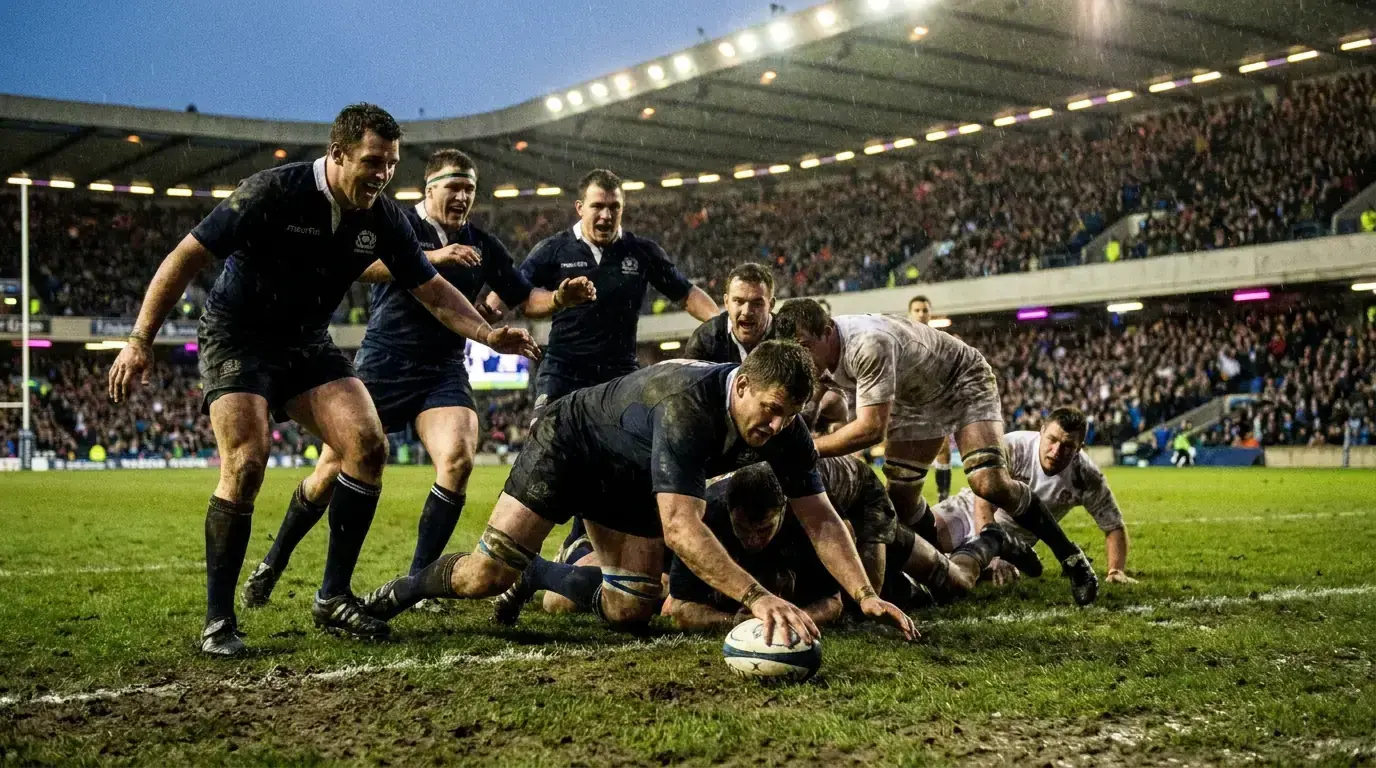
Last try scorer is the thinnest of the three markets by recreational volume but carries pricing quirks worth understanding. The last try in a match is disproportionately scored by the trailing side as they push for a consolation or by the leading side as the opposition opens up in transition. Backs score most last tries because the late-match shape favours backline attack. Front-row forwards almost never score the last try; their prices in last-scorer markets are very long and almost always too short relative to actual probability.
Anytime try scorer is where most serious bettors who play try scorer markets actually focus. The lines on the favoured wingers and centres are usually too short, but the lines on second-tier scorers — the back-rows, the fullbacks, the loose-head props who have a try threat from short range — frequently sit at attractive prices. Across a season, building a portfolio of anytime try scorer bets on undervalued players has produced respectable returns when paired with disciplined position selection.
Variance and stake sizing on scorer markets
Try scorer bets are high-variance bets, and stake sizing has to reflect that. NRL total revenue in 2025 reached AUD 845.6 million, and a substantial share of that turnover passes through try scorer markets — but the realised variance on these bets is enormous. A bettor with a genuine 5% edge on first try scorer markets needs to place hundreds of bets across a season to see the edge express itself, and the drawdowns along the way can exceed 30% of starting bankroll.

The bettors who profit from try scorer markets consistently use small flat stakes — usually 1% of bankroll or less per bet — and place high volume across the season. The strike rate on a typical first try scorer portfolio is in the 10-15% range, which means the bettor is losing 85-90% of bets and relying entirely on the price-versus-probability gap to generate profit. That requires emotional discipline that most casual punters never develop.
If the overall rugby props landscape interests you more broadly, I have covered the NRL prop board specifically in my piece on NRL prop bets.
Where the patient try scorer bettor finds value
Three specific opportunities recur across major competitions. First, lower-tier forwards on favoured sides in matches where the favourite is expected to dominate territorially — pick-and-go tries from close range often go to specific forwards whose long-tail prices are too long. Second, outside centres in matches where the opposition is missing its first-choice defensive thirteen — the launch-play opportunity rises sharply and the market often does not adjust. Third, fullbacks on attacking sides whose role has shifted to inside the line in recent weeks — the position change creates more try-scoring opportunities than the season-long average reflects.
None of these are dependable week-to-week. All of them reward research time spent on team news, defensive matchup analysis, and recent coaching trends. The first try scorer market is not where casual bettors should be placing bets. It is where dedicated bettors with a process can occasionally find value worth taking. The discipline required is the same discipline that pays in every other rugby market: research, sizing, sample size, patience.
