


Why a British rugby bettor should care about Canberra
The first time an Australian friend asked me to explain ACMA over a beer in Brisbane, I made the mistake of treating it as a niche curiosity. Two seasons later, a sportsbook I’d been using to bet NRL props quietly disappeared from his phone because the regulator had escalated enforcement against unlicensed offshore operators. The platform still worked for me in London. It stopped working for him overnight. That’s the moment Australian rugby betting regulation became, for me, a topic worth understanding properly rather than glancing at.
The Australian sports betting market reached around AUD 8.32 billion in 2025 and is forecast to grow to AUD 61.27 billion by 2035, a compound annual growth rate of 22.1%. Those numbers explain the political weight of the regulatory file: a market growing that fast, in a country that has historically debated its gambling relationship more publicly than any other developed economy, was always going to attract serious regulatory attention. What’s followed since 2017 has been the most aggressive structural reform of an online wagering market anywhere in the world.
This piece is for the British rugby bettor who wants to understand the regime they’re occasionally operating across — whether that’s via a UK account that quietly accepts NRL bets, an Australian-licensed operator they hold for travel purposes, or simply a long-term interest in the regulatory direction of travel. Australia is roughly five years ahead of the UK in several specific reforms, including the credit-card ban, and watching how those reforms have landed tells you a lot about what the UK environment will look like in 2027 or 2028.
The legal framework: the Interactive Gambling Act and what it does
The cornerstone of Australian online wagering law is the Interactive Gambling Act 2001, amended substantially in 2017 and again in increments since. The Act prohibits offering interactive gambling services to Australian residents unless the operator holds a licence from an Australian state or territory regulator. It does not prohibit Australians from gambling — the offence sits with the operator, not the punter — but it does empower the federal regulator to act against unlicensed offerings.
The total gambling expenditure across Australia for the 2022-23 financial year reached AUD 244.3 billion, up 18.2% year on year. That figure includes every gambling vertical from electronic gaming machines to casino tables, but it sets the scale of what the regulatory system is policing. Online wagering specifically grew 165.7% to AUD 75.4 billion in the same period, representing 31% of total gambling turnover in the country. The IGA framework is what governs the online slice, and within that, rugby betting sits inside the broader sports wagering category.
What the IGA does prohibit, specifically, is in-play sports betting via online channels. This is the regulatory quirk that most surprises British bettors: you can bet on a Wallabies test before it kicks off via an online account, but once the first whistle blows you cannot place an in-play bet through the same online interface. In-play betting is permitted only via telephone or in-person at a licensed venue. The rule exists to limit the most addictive form of micro-betting and has been the single most-debated provision of the Act since its 2017 expansion.
For rugby specifically, this means the Australian in-play market for NRL, Super Rugby Pacific and Wallabies fixtures is dramatically smaller than the UK equivalent. UK-licensed operators offer full in-play coverage on every major rugby fixture; the Australian-licensed equivalents, by law, cannot. Anyone betting from Australia who wants in-play coverage has to use a telephone betting service, with all the friction that implies in a smartphone era. The rule is also one of the reasons offshore operators continue to attract Australian users despite the IGA’s prohibitions — the inconvenience of telephone betting drives some demand to the unlicensed market the regulator is trying to suppress.
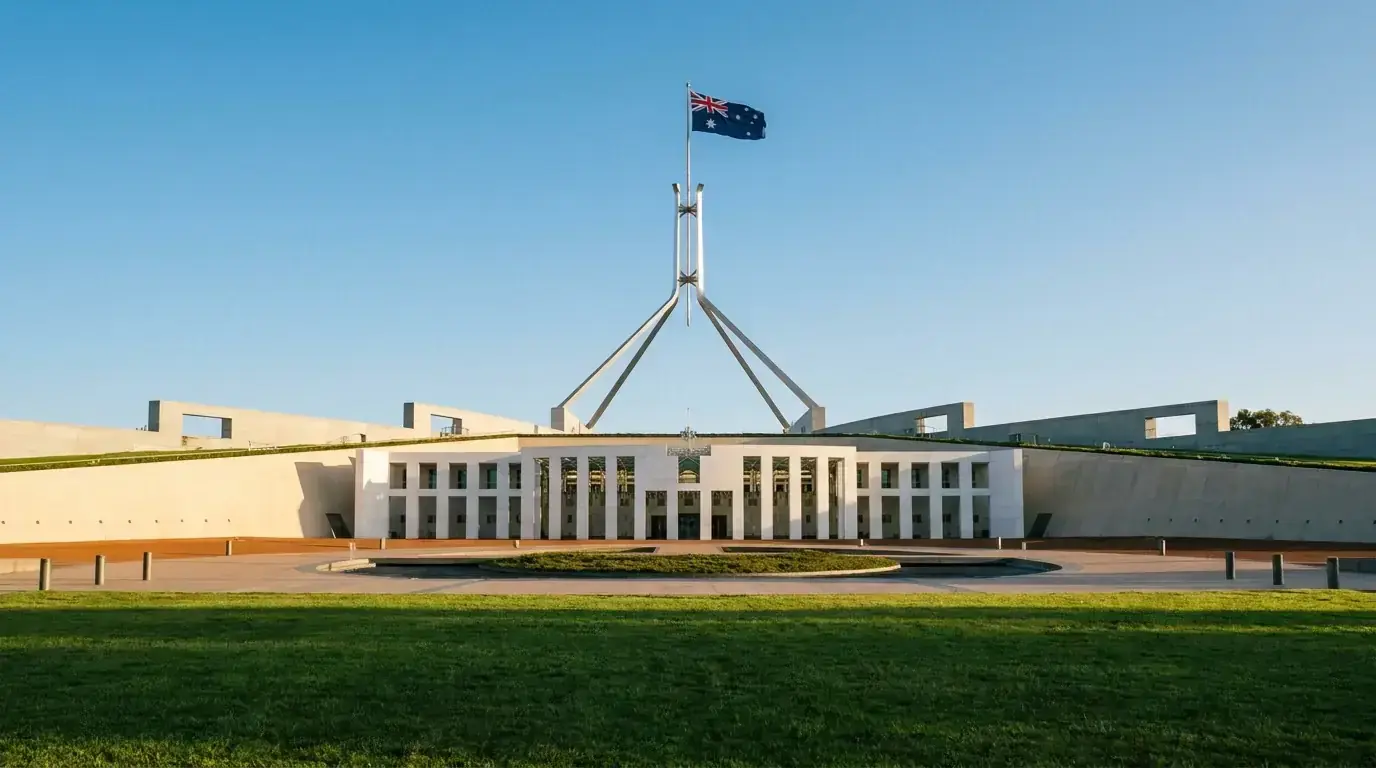
ACMA, the regulator that’s been getting busier
The Australian Communications and Media Authority — ACMA — is the federal body that enforces the IGA. Its powers expanded substantially in the 2017 amendments and have been used progressively more aggressively each year since. The Q4 2024 enforcement report records 301 complaints investigated and 75 illegal sites referred for blocking. That blocking takes the form of formal requests to Australian internet service providers to add the offending domains to a national blocklist, and ISPs have complied without legal challenge in every case I’ve followed.
What ACMA actually does on a day-to-day basis breaks into four streams. First, it processes complaints — anyone resident in Australia can submit a complaint about an operator they believe is offering services illegally, and the agency must triage and investigate. Second, it audits licensed operators for compliance with the various consumer-protection rules layered on top of the IGA. Third, it coordinates with the state and territory regulators that actually issue the operator licences. Fourth, it administers the national self-exclusion register, which I’ll come to below.
The enforcement trajectory over the last three years has been clearly upward. Block requests have increased every year, the scope of “illegal” has been broadened in subsequent amendments, and the agency now publishes quarterly enforcement reports that name and detail individual investigations. From a British observer’s perspective, the most striking feature of the Australian regulator is its visibility — ACMA publishes more granular operational data than the UK Gambling Commission does about its own enforcement, and the regulatory tone is more directly enforcement-oriented than the UK’s tendency toward operator-side negotiation.

The practical consequence for rugby bettors is that the list of operators legally serving Australian residents is shorter and tighter than it was five years ago, and continues to shrink. Sites that operated freely in 2018 have either obtained Australian licences, exited the market, or ended up on the blocklist. The market consolidation favours a handful of large licensed operators, which has its own implications for line quality and prop depth on rugby fixtures — fewer competitors means narrower competition for price, which sometimes means wider overrounds.
BetStop, the national self-exclusion register
BetStop is the centrepiece of Australia’s harm-minimisation architecture and one of the most ambitious pieces of consumer protection in any major gambling market worldwide. The register, launched in 2023, allows any Australian resident to register a single, system-wide exclusion that blocks every Australian-licensed online wagering operator from accepting their account. As of the end of the second quarter of the 2024-25 financial year, BetStop had recorded 35,671 total registrations, with 26,020 of those currently active.
The mechanics are deliberately simple. A user creates a BetStop account, sets the exclusion duration (minimum three months, maximum lifetime), and the register propagates the block across all licensed operators in real time. New account creation by an excluded user is blocked automatically. Existing accounts at any licensed operator are closed. The user cannot reverse the exclusion before the chosen end date — there’s no cooling-off period or operator override.

The system has gaps, deliberately and not. BetStop blocks Australian-licensed operators, not offshore ones, which is part of the reason ACMA’s blocklist enforcement matters: an excluded user who finds an unlicensed offshore site can in principle still bet, which is exactly the loophole the blocklist is designed to close. BetStop also doesn’t block land-based wagering venues, electronic gaming machines, or casinos — the register is exclusively for online and telephone wagering. Users wanting comprehensive exclusion have to use additional state-level systems on top of BetStop.
One AGRC researcher put a finger on the structural challenge with consumer-protection tools generally: the perception of these tools as reactionary rather than preventative limits who uses them. Their phrasing was that the design intent is preventative — useful to any bettor, regardless of harm level — but the public reads them as reactionary, useful only to people already in trouble. That perception gap is exactly what BetStop’s marketing has been working to close since launch, with limited success so far. Registration numbers are climbing but remain low relative to the active online wagering population.
For a UK observer, BetStop is the prototype for what a unified national self-exclusion register can look like. GAMSTOP has performed a similar role in the UK since 2018, with broadly comparable mechanics. The differences are in granularity — Australia’s BetStop integrates more tightly with the operator account-creation flow — and in cross-jurisdictional reach, where neither register meaningfully addresses offshore operators. I’ve covered BetStop’s mechanics and edge cases in more depth in the BetStop self-exclusion guide.
The credit-card ban and what changed in 2024
From August 2024, Australian-licensed online wagering operators have been prohibited from accepting credit cards or any credit-equivalent payment method, including digital wallets funded by credit. The ban followed years of advocacy from harm-minimisation researchers and a Productivity Commission review that found credit-card gambling significantly increased the probability of harm escalation among problem and at-risk bettors.
The mechanics are straightforward. Operators must check the funding source of any deposit. Debit cards, direct bank transfers, and bank-funded digital wallets remain permitted. Credit cards and credit-funded payment instruments are not. The rule applies to every Australian-licensed operator, including the major bookmakers that dominate the NRL and Super Rugby Pacific betting markets. Enforcement is via ACMA, with operator licences at stake for repeated violations.
The effect on the rugby betting market has been quietly significant. Operator deposit volumes dropped immediately on implementation — the Australian Banking Association reported a measurable reduction in gambling-related credit card transactions in the second half of 2024 — and the affected users either switched to debit-based funding or, in a smaller fraction of cases, migrated to offshore operators outside the ban’s reach. The harm-minimisation case for the ban is straightforward: reducing the speed and ease of escalation when a bettor is losing makes sustained harm episodes harder to enter.

The UK is now actively debating an equivalent measure, with the Gambling Commission having consulted on credit-card restrictions multiple times since 2020. Australia’s experience is being studied closely. The early Australian data suggests the ban has reduced harm without producing a large-scale migration to the black market — though the magnitude of the offshore effect is contested and hard to measure cleanly.
State-level rules and the patchwork beneath the federal framework
The IGA is federal but wagering licences are issued at state and territory level. The Northern Territory has historically licensed the majority of large online bookmakers, partly because of a tax regime that has been more favourable to operators than the equivalent in New South Wales or Victoria. The state-level layer matters for bettors because the specific rules on advertising, inducements, and operator conduct vary meaningfully across jurisdictions.
Victoria is the most heavily taxed gambling market in the country. The state’s wagering operators paid out AUD 7.3 billion in player losses during the 2024-25 financial year, of which AUD 2.4 billion went to the state in tax revenue. That tax burden is passed back to bettors through wider margins on Victorian-facing markets, though competition between operators mitigates the effect somewhat. New South Wales and Queensland sit between Victoria and the Northern Territory on the tax spectrum. Western Australia and South Australia have their own state-specific regimes that produce slightly different inducement rules and advertising windows.
For a UK observer, the closest parallel to the Australian federal-state split is the relationship between the UK Gambling Commission and the various local authorities that license land-based premises. The British online wagering regime is centralised at the Commission, with no state-level analogue. The Australian arrangement produces more legal complexity but also more experimentation: states can pilot rules — like the Victorian opt-out advertising restrictions — that other jurisdictions watch before adopting or rejecting.
Rugby league in Australia sits at the intersection of these state regimes because the NRL is genuinely cross-state, with teams in Sydney, Melbourne, Brisbane, Townsville, Newcastle, Canberra, the Gold Coast, Auckland and elsewhere. A bettor based in Sydney is regulated by the New South Wales regime; one based in Melbourne by Victoria’s; one in Brisbane by Queensland’s. The operator licence determines which rules apply, not the bettor’s location alone, but the state-level rules on advertising and inducements still vary by where the bettor is reached.

Advertising rules and the inducement crackdown
The Australian advertising framework for online wagering has tightened substantially since 2018. Television advertising during live sport broadcasts is prohibited from five minutes before kick-off until five minutes after the final whistle. Online wagering advertising during programmes classified as suitable for children is broadly prohibited. Inducement advertising — sign-up bonuses, refunded losses, enhanced odds — has been progressively restricted, with the most recent reform packages further narrowing what operators can offer to new and existing customers.
Online wagering turnover grew 165.7% to AUD 75.4 billion in 2022-23, which represents 31% of total Australian gambling turnover. The advertising restrictions exist because that growth happened alongside measurable increases in gambling harm metrics. Both numbers — the turnover growth and the harm metrics — drive the policy debate continuously, and the regulator’s calibration of advertising rules tries to find a balance that the industry can live with and the harm-prevention community can accept.
For rugby bettors specifically, the most visible effect is the absence of in-game wagering advertising during NRL and Super Rugby Pacific broadcasts. Compared to a UK Six Nations broadcast — where bookmaker logos appear in pitchside advertising, in-game graphics, and commercial breaks — an Australian rugby broadcast is notably quieter on the wagering front. The pre-game and post-game windows still carry significant advertising, and the social media and digital channels operate under separate rules, but the in-game environment has been deliberately stripped back.
The inducement rules deserve a specific note. Sign-up bonuses are not prohibited outright in Australia, but the structure of what can be offered is heavily constrained. Operators cannot advertise specific bonus values to non-account-holders, cannot offer refund-loss promotions on certain categories of bet, and cannot link bonus structures to encourage continued play after a losing streak. The UK rules on these points are similar in spirit but looser in implementation; Australia is the leading edge of inducement restriction in the major English-speaking markets.
How the UK compares: ACMA versus the Gambling Commission
The UK gambling sector posted a record online gross gambling yield in the quarter ending December 2024 of £1.54 billion, up 21% year on year, with the largest single driver being real-event betting up 38%. In the first quarter of 2025, online GGY was £1.45 billion, up 7% year on year. The Q1 2025 figure included an average of 12.7 million monthly active accounts at the largest operators. The annual total for the UK gambling industry across the April 2023 to March 2024 period was £15.63 billion — a record.
The structural differences between the UK Gambling Commission and Australia’s ACMA-plus-state arrangement are larger than the surface similarities suggest. The Commission is a single national regulator with broad enforcement powers, similar to ACMA, but it sits within a unitary licensing framework. It does not have the IGA’s in-play prohibition. It does not, as of 2026, operate a credit-card ban as comprehensive as Australia’s, though card restrictions have been progressively tightened. It does operate GAMSTOP as a national self-exclusion register comparable to BetStop, with broadly equivalent reach.
For a UK rugby bettor, the practical points of difference are: full in-play coverage is available in the UK and not in Australia; credit cards have been progressively restricted in the UK but not banned outright as of early 2026; sign-up bonuses are looser in the UK than in Australia; in-game broadcast advertising is heavier in the UK. Each of those four differences is currently under active policy debate in Westminster, and several Australian-style reforms are on the medium-term horizon. The direction of travel is broadly toward the Australian model, with a five-to-seven-year lag.

I do think it’s worth noting honestly: I do not believe the UK will adopt the IGA’s in-play prohibition. The political and commercial weight against that specific reform is considerable. But credit-card restrictions, broadcast advertising windows, and tightened inducement rules — all of which Australia has already implemented — are realistic UK reforms in the next two policy cycles.
New Zealand, South Africa and the US snapshot
New Zealand operates a TAB Trust monopoly model for licensed sports wagering, with offshore betting permitted but not regulated locally and a substantial reform package finally moving through parliament in 2025-26 that may introduce a wider licensing regime. From a UK rugby bettor’s perspective, NZ rugby fixtures — Super Rugby Pacific, All Blacks tests — are widely available on UK-licensed operators with no NZ-specific friction.
South Africa operates a provincial licensing regime that has been gradually professionalising over the last decade. The wagering market for URC fixtures involving South African franchises and for Springboks tests is well-served by both South African and international operators. UK bettors face no meaningful friction in accessing those markets.
The United States operates a state-by-state regulatory patchwork following the 2018 Supreme Court ruling that permitted state-level sports betting legalisation. Rugby coverage at US-licensed sportsbooks remains thinner than in the UK or Australia, with Major League Rugby the only league consistently quoted across the major states. Six Nations, NRL and Super Rugby Pacific markets exist but vary widely by operator. The US market is still in its expansion phase and the regulatory environment continues to shift annually.
None of these markets is as structurally regulated as Australia’s. The UK sits in the middle of the spectrum — more regulated than the US, less prescriptive than Australia, broadly comparable to South Africa and New Zealand. The Australian framework is the reference point for what comprehensive consumer-protection regulation in this sector looks like, and it’s the framework worth watching closely if you want to anticipate UK direction.
What this regulatory architecture means for the bettor
The lesson I draw from a decade of watching Australian wagering regulation evolve is that the regulator’s tempo matters more than the headline reform. Each individual measure — the credit-card ban, BetStop, the advertising restrictions, the in-play prohibition — has been incremental. The cumulative effect across seven years has been transformative. The Australian rugby bettor in 2026 operates in an environment unrecognisable from 2018, and the trajectory continues.
For the UK rugby bettor following Australian regulation as a leading indicator, the message is this. The reforms that have landed in Australia will, in some form, land in the UK within five years. Plan your betting habits — funding methods, account structures, harm-minimisation tools — on the assumption that the UK environment will move toward the Australian one. The bettors who’ll adapt fastest are the ones who treat the Australian present as the British future, not as a foreign curiosity.
